Last Updated: October 26, 2026
Quick Summary
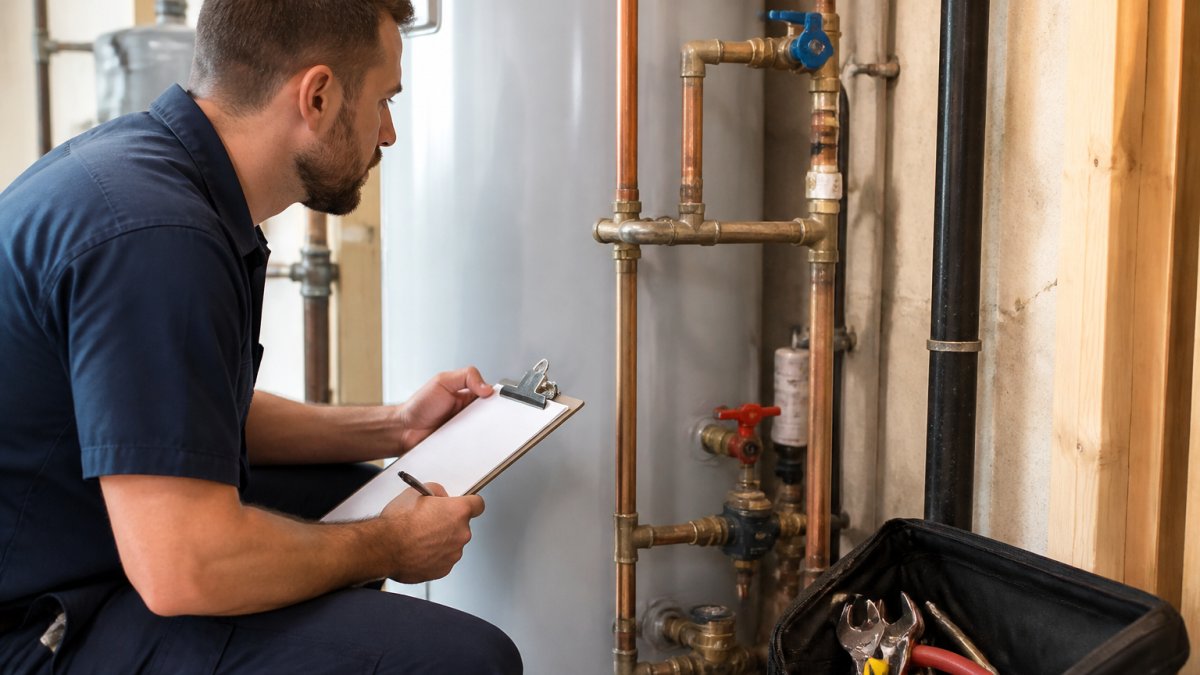
A preventative plumbing maintenance checklist in 2026 is a scheduled set of inspections and small repairs that catch leaks, corrosion, and failing fixtures before they become water damage claims. Run it seasonally: inspect pipes and test the sump pump in spring, flush the water heater in summer, insulate pipes in fall, and test the main shutoff valve in winter.
- Log your water meter baseline each spring with all fixtures off to spot hidden leaks.
- A healthy home water pressure reading sits between 45 and 80 psi.
- Test the sump pump and confirm it discharges within 30 seconds of float lift.
- Flush sediment from the water heater tank until the drain water runs clear.
- Test the main water shutoff valve once in winter so you know it turns.
Table of Contents
- Why Preventative Plumbing Maintenance Pays Off in 2026
- Your Seasonal Plumbing Maintenance Calendar
- How to Check for Plumbing Leaks Room by Room
- Sump Pump Battery Backup Test: A Step-by-Step Walkthrough
- Water Heater Maintenance Checklist for Homeowners
- Drains, P-Traps, and Sewer Lines: Clearing the Hidden Risks
- DIY Versus Professional: Where to Draw the Line
- Book Your Preventative Plumbing Inspection
- Frequently Asked Questions
Why Preventative Plumbing Maintenance Pays Off in 2026
A preventative plumbing maintenance checklist in 2026 is a scheduled set of inspections and small repairs that catch leaks, corrosion, and failing fixtures before they become water damage claims.
The math is not complicated. A dripping supply line under a sink costs a few minutes to tighten.
Below, we break down exactly what to check, when to check it, and when to stop and call a licensed plumber.
Your Seasonal Plumbing Maintenance Calendar
Seasonal plumbing maintenance works best on a calendar, not on memory. The schedule below is how we would run a typical home, with time estimates you can plan around and a measurable pass/fail check for each task so you know whether you are done or whether something needs follow-up.
| Season | Task | Frequency | Time | Pass/Fail Check |
|---|---|---|---|---|
| Spring | Inspect exposed pipes in basement and crawlspace | Once | 20 min | No rust streaks, white mineral crust, or damp fittings |
| Spring | Test sump pump and clear discharge line | Once | 15 min | Pump kicks on and discharges within 30 seconds of float lift |
| Spring | Record water meter baseline | Once | 5 min | Meter reading logged with all fixtures off |
| Summer | Flush water heater tank | Once | 45 min | Drain water runs clear, no sediment slug |
| Summer | Check outdoor hose bibs and shutoff valves | Once | 10 min | No drip at valve; indoor shutoff closes fully |
| Summer | Test water pressure at an outdoor bib | Once | 10 min | Reading between 45 and 80 psi |
| Fall | Insulate pipes in unheated spaces | Once | 30 min | No exposed pipe in garage, crawlspace, or exterior wall |
| Fall | Drain and store garden hoses | Once | 10 min | No water left in bib or hose |
| Winter | Test main water shutoff valve | Once | 5 min | Valve turns freely and stops flow |
| Winter | Watch for freeze risk on exterior walls | Monthly | 5 min | No frost on pipe surface; cabinet doors open on cold snaps |
Spring and Summer Tasks
Spring is your inspection season. Walk the basement and crawlspace with a flashlight and look for rust streaks, white mineral crust on fittings, and any pipe that feels damp.
Summer is when the water heater gets attention. Flushing sediment from the tank extends its life and keeps recovery times reasonable. Check outdoor hose bibs for drips at the valve, and confirm the shutoff inside the house actually closes.
Fall and Winter Tasks
Fall is about freeze prevention. Any pipe running through an unheated garage, crawlspace, or exterior wall needs pipe insulation before the first hard frost. Disconnect garden hoses so water cannot sit in the bib and split it.
Winter is the season for the main water shutoff valve. Test it once, so you know it turns when you need it. If it is seized, that is a job for a plumber, not a wrench and hope.
Prioritize by Risk, Age, and System Type
Not every task carries the same weight. Rank your list by what fails catastrophically versus what fails inconveniently:
- Urgent failure risks: main shutoff valve, supply lines under sinks, washing machine hoses, and the sump pump. A failure here means water damage, so test these first.
- Routine upkeep: water heater flushing, drain cleaning, and hose bib checks. Skipping these shortens equipment life but rarely floods a basement.
- Older homes and slab foundations: add a camera inspection of the main drain line every few years, since cast iron and clay lines corrode and crack out of sight.
Keep a Simple Inspection Log
A checklist only pays off if you can compare this year to last. Keep a one-page log with the date, the task, the reading or observation, and the follow-up action. Record the water meter baseline each spring, the pressure gauge reading each summer, and the sump pump test result each spring. If the meter moves when nothing is running, or pressure drifts outside the 45-80 psi band, you have a concrete reason to call a licensed plumber rather than a vague hunch.
Photograph each reading and each pipe run you inspect. A dated photo of a fitting is the fastest way to prove a slow leak started after a repair, or to show a plumber exactly what changed.
How to Check for Plumbing Leaks Room by Room
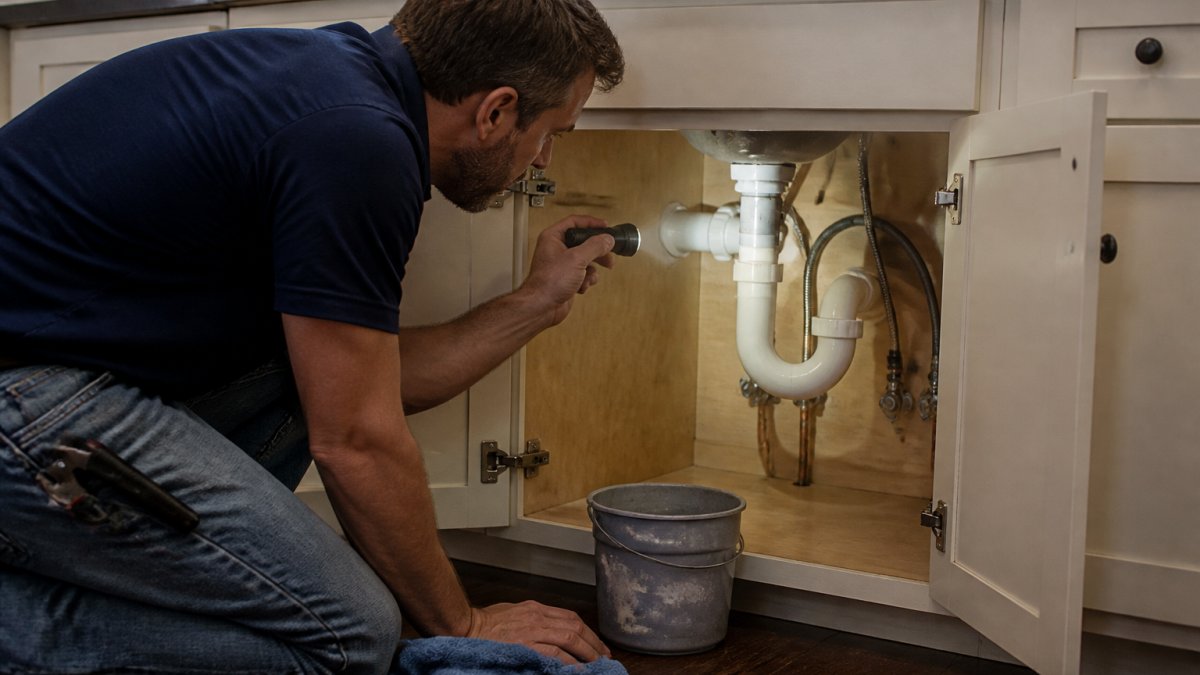
How to check for plumbing leaks comes down to three signals: water where it should not be, a meter that moves when nothing is running, and sound you cannot account for. Work through the house in this order.
- Under every sink. Run a finger along the supply lines and the P-trap. Any moisture means a fitting needs attention.
- Behind each toilet. Look at the base for staining and listen for a running fill valve.
- Utility areas. Check the water heater base, the washing machine hoses, and the floor around the sump pit.
- The water meter. Shut every fixture off and watch the meter. Movement points to a hidden leak.
If your own checks turn up moisture you cannot trace, water leak detection in Carleton Place can confirm and locate the source before it spreads.
Sump Pump Battery Backup Test: A Step-by-Step Walkthrough
A sump pump battery backup test confirms the backup pump will run during a power outage, which is exactly when the primary pump cannot. Do it before every spring thaw.
- Locate the backup unit and confirm the battery terminals are clean and tight.
- Press the test button on the backup controller and listen for the pump to start.
- If there is no test button, lift the float manually to trigger the pump.
- Pour water into the pit until the backup activates and discharges.
- Check the discharge line outside for blockages or ice.
Watch out: a backup that hums but does not move water usually means a dead battery or a blocked discharge line. If your test reveals a failing pump or standing water, flooded basement services are worth calling before the next storm.
Water Heater Maintenance Checklist for Homeowners
A water heater maintenance checklist is short, but skipping it is one of the most common causes of premature tank failure. Run through these items once a year.
- Flush sediment from the tank until the drain water runs clear.
- Test the temperature and pressure relief valve by lifting the lever briefly.
- Check the anode rod and replace it if it is heavily corroded.
If your checks turn up leaks, no hot water, or temperature swings you cannot explain, water heater repair in Carleton Place is the next step rather than a second round of DIY.
Drains, P-Traps, and Sewer Lines: Clearing the Hidden Risks
Drain maintenance is the part of a preventative plumbing routine most homeowners skip until something backs up.
Clean each P-trap by hand rather than relying on chemical drain cleaners, which can damage older pipes. Run hot water weekly to keep grease moving.
When slow drains or repeated clogs point to something bigger, professional drain cleaning and pipe repair clears the line and confirms what caused it.
DIY Versus Professional: Where to Draw the Line
DIY covers inspection, cleaning, and small adjustments. Anything involving gas, electrical connections, sewer lines, or opening a wall belongs to a licensed plumber. That line is not about skill, it is about safety and insurance.
Safe to DIY
- Testing valves and the main shutoff.
- Flushing the water heater tank and testing the temperature and pressure relief valve.
- Cleaning P-traps by hand.
Stop and Call a Professional
- Gas water heaters, gas lines, and anything requiring a gas fitter.
- Electrical connections at the water heater or sump pump.
- Sewer line blockages and recurring clogs in the same fixture.
Warning Signs That Mean Stop Now
Some findings are not a maintenance item, they are a shutdown. Stop and call a licensed plumber if you see:
- Water pooling or actively dripping from a ceiling, wall, or cabinet base.
- Sewage backing up into a floor drain or tub.
- No water at any fixture, or a sudden pressure drop across the whole house.
Emergency Response and Damage Mitigation
If a pipe bursts or a sewer backs up, the first minutes matter more than the repair:
- Shut off the main water valve. Know where it is before you need it, that is why the winter test matters.
- Cut power to any circuit near standing water at the panel, if it is safe to reach.
- Open a low faucet to drain remaining pressure from the lines.
- Document the damage with dated photos and a written list before cleanup, for the insurance claim.
- Call a licensed plumber for the repair and a restoration professional for water extraction and drying.
Do not run a chemical drain cleaner into a line that is already backing up, and do not open a wall to chase a leak yourself. Both turn a contained problem into a larger, more expensive one.
When a job crosses that line, a 24/7 emergency plumber in Carleton Place is the call to make rather than a gamble.
Book Your Preventative Plumbing Inspection
A preventative plumbing maintenance checklist in 2026 only pays off if someone actually runs it, and a professional inspection catches the things a homeowner walkthrough misses: pipe condition inside walls, water pressure at the source, and early corrosion on fittings you cannot see. Spencer4Hire Plumbing provides licensed, insured plumbers, same-day or next-day service, and clear quotes with no hidden fees.
Frequently Asked Questions
What should be included in a preventative plumbing maintenance checklist?
A solid preventative plumbing maintenance checklist covers visible pipe inspection for corrosion, leak checks under sinks and around toilets, drain and P-trap cleaning, water pressure testing, water heater flushing, sump pump testing, and faucet aerator cleaning. Add seasonal tasks like insulating exposed pipes before winter and checking the main water shutoff valve. Record the date and findings for each task so you can spot trends over time and catch small issues before they become expensive repairs.
How often should you inspect your home’s plumbing?
Walk through your home monthly for quick visual checks: look under sinks, around the toilet base, and near the water heater for moisture or staining. Schedule a deeper inspection quarterly, and book a professional plumbing inspection once a year. Homes with older galvanized or polybutylene pipes, or properties over 30 years old, benefit from professional inspections every six months. Consistent inspection frequency is what turns preventative plumbing from a one-time chore into real failure prevention.
How do you test a sump pump and its battery backup?
Pour a bucket of water into the sump pit until the float rises and the pump kicks in. Watch that it drains the pit fully and stops on its own. For the battery backup, unplug the primary pump or switch it to backup mode, then repeat the water test to confirm the backup runs. Check the battery terminals for corrosion, confirm the charger indicator light is on, and replace batteries every three to five years. Test monthly during wet seasons and before spring thaw.
How can you check for hidden plumbing leaks?
Shut off every fixture in the house and locate your water meter. Note the reading, wait two hours without using water, and check again. Any movement means water is escaping somewhere. Pair that with a visual sweep: look for warped flooring, musty smells, bubbling paint, or unexplained spikes in your water bill. Hidden leaks behind walls or under slabs often show up as water damage before they show up as puddles, so meter tests are worth doing monthly.
When should you call a licensed plumber for maintenance?
Call a licensed plumber when you find corroded or leaking pipes, water pressure that stays low after cleaning aerators, a water heater that rumbles or won’t hold temperature, sewage smells, or a sump pump that fails its test. Also call if you’re uncomfortable shutting off the main water valve or working near gas lines. Tasks like flushing a water heater, inspecting a sewer line with a camera, or repiping older galvanized systems are best handled by a professional to avoid water damage and code issues.
What plumbing maintenance should homeowners do each season?
In spring, test the sump pump, check outdoor hose bibs for winter damage, and clear gutters and drains. Summer is ideal for water heater flushing and checking water pressure. In fall, insulate exposed pipes, disconnect garden hoses, and shut off outdoor water supplies before the first freeze. Winter calls for keeping cabinet doors open on cold nights, watching for freeze prevention signs, and testing smoke and water alarms. A seasonal plumbing maintenance rhythm keeps small tasks from piling into emergency calls.