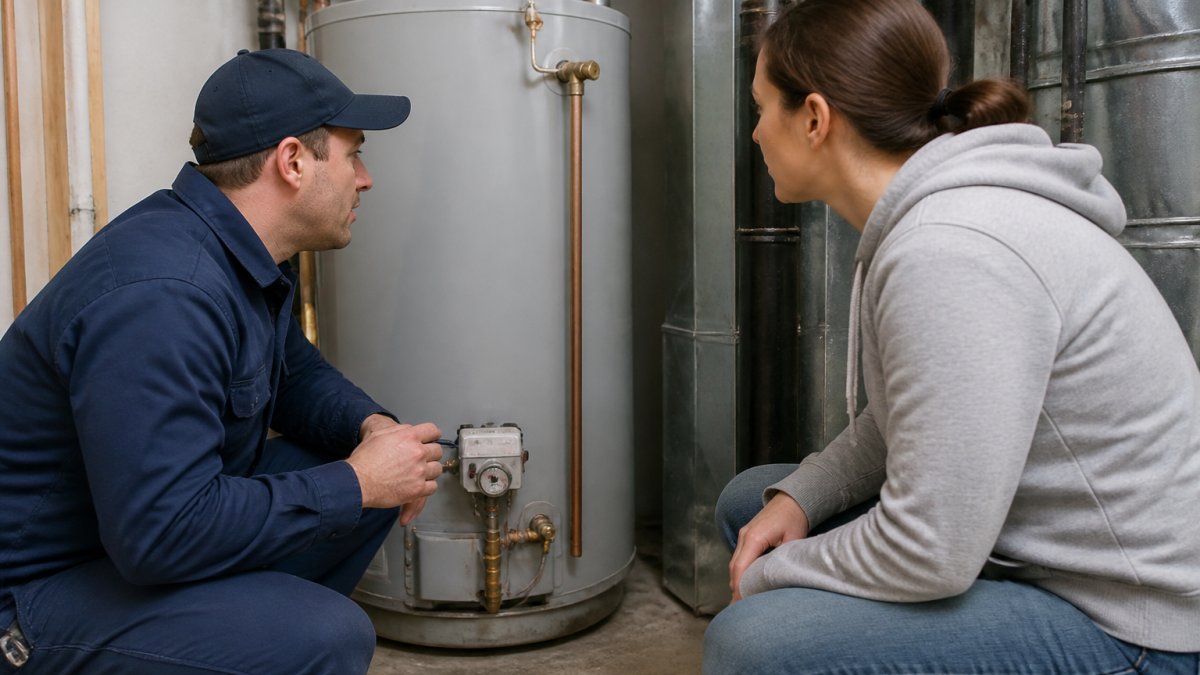
Last Updated: October 25, 2026
Quick Summary
Water heater installation cost is a stack of separate charges, not one number: the unit, labor, permit and inspection fees, disposal of the old unit, and code upgrades such as venting or gas line work. A like-for-like tank replacement is the shortest job, while a conversion or relocation adds new scope and climbs well beyond a standard swap.
- A conventional storage tank costs the least upfront, a tankless unit the most, and heat pump models sit in between.
- Labor covers draining, disconnecting, removing, setting, reconnecting, filling, testing, and hauling the old tank away.
- Most jurisdictions require a permit for any water heater replacement, not just a conversion.
- A quote that excludes the permit and disposal is not cheaper, it is incomplete.
- Buying usually wins for long-term owners because rental payments add up and the equipment is yours.
Table of Contents
- What the Total Water Heater Installation Cost Actually Includes
- Equipment Cost by Type: Tank, Tankless, Gas, and Electric
- What Water Heater Labor Cost Covers on a Standard Replacement
- Tankless Water Heater Installation Cost: Why the Upfront Price Climbs
- Permits, Code Requirements, and Other Hidden Costs
- How to Read a Water Heater Installation Quote Line by Line
- Water Heater Rental vs. Buying: Which Makes More Sense for Your Home?
- Book a Written Water Heater Installation Quote
- Frequently Asked Questions
What the Total Water Heater Installation Cost Actually Includes
A water heater installation cost breakdown is not one number. It is a stack of separate charges: the unit, labor, permit fees, disposal, and small extras that only show up once a plumber is in your basement. At Spencer4Hire Plumbing, we provide clear quotes with no hidden fees, because homeowners who get blindsided accepted a lump-sum figure over the phone.
Here is what the full picture looks like:
- Equipment: the tank or tankless unit, sized to your household
- Labor: removal, installation, connections, testing
- Permits and inspection: required for most replacements
Below, we break down each line so you can read a quote and know what you are paying for.
Equipment Cost by Type: Tank, Tankless, Gas, and Electric
Equipment is the most visible line on any water heater installation quote. A conventional storage tank costs the least upfront, a tankless unit the most, and heat pump models sit in between with lower running costs.
General market estimates for 2026 put tank-style replacement in the low thousands of dollars, with tankless replacement running higher, according to Angi’s water heater installation cost guide.
| Type | Upfront Cost | Best For | Watch For |
|---|---|---|---|
| Conventional tank (gas) | Lowest | Most homes, fast swap | Recovery time after heavy use |
| Conventional tank (electric) | Low to mid | Homes without gas service | Higher running costs |
| Tankless (gas) | Highest | Small households, endless hot water | Gas line and venting upgrades |
| Heat pump | Mid to high | Long-term savings focus | Needs airflow and space |
Tank capacity and why a standard-sized unit prices differently from a larger one
A standard-sized tank and a larger tank are not the same job. The bigger unit costs more, weighs more to move, and sometimes needs more room and stronger connections. A larger gas unit is a common family-size choice at the higher end of standard replacement pricing.
If you are comparing gas against other options, you can review gas water heater installation and repair in Ottawa to see how a gas install is scoped.
What Water Heater Labor Cost Covers on a Standard Replacement
Labor is where most quotes get vague.
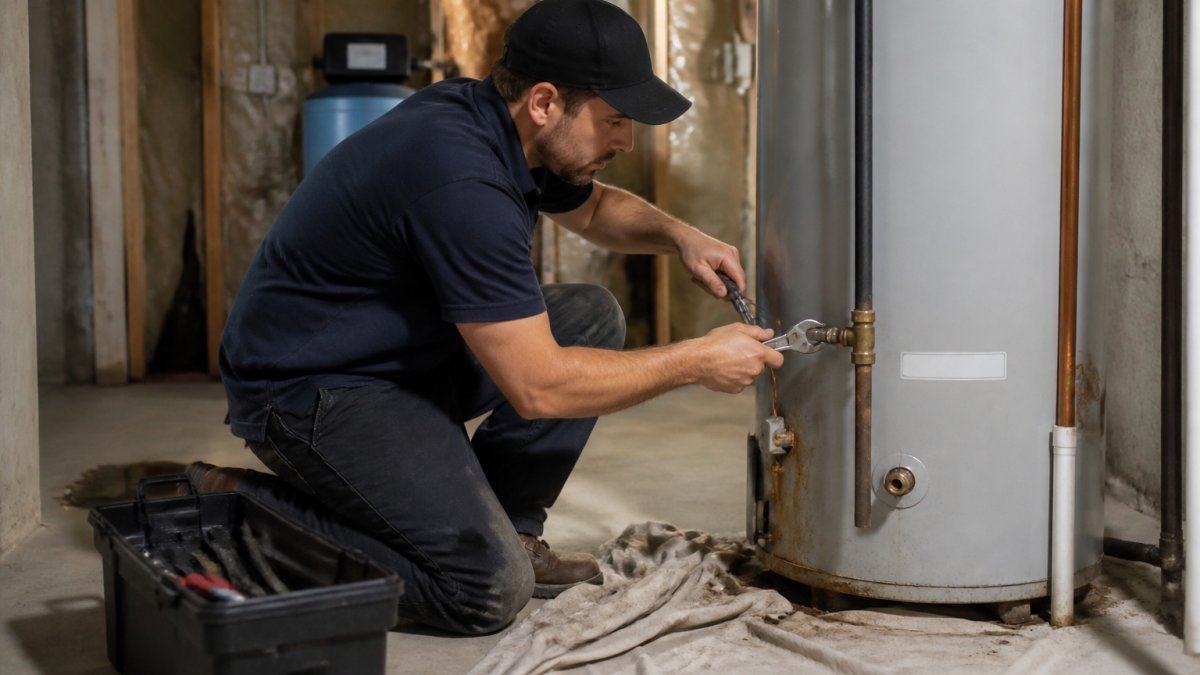
A like-for-like swap takes less time than a conversion. Same size, same fuel, same location: the job is quick. Move the unit, change the fuel type, or upgrade the venting, and the hours climb.
What drives labor up:
- Access: a tight basement or crawlspace slows everything down
- Old fittings: seized valves and corroded pipes need replacing mid-job
- Code upgrades: new venting or a gas line resized for the unit
A common mistake is assuming labor is fixed. It is not. It tracks the complexity of your specific install.
Tankless Water Heater Installation Cost: Why the Upfront Price Climbs
Tankless water heater installation cost runs higher than a tank swap, and rarely because of the unit alone.
Market estimates for 2026 put tankless replacement well above tank replacement, with labor for a like-for-like tankless swap running into the thousands on its own, based on Remodel Cost Calc’s tankless installation breakdown.
If you are weighing the switch, you can look at tankless water heater installation in Ottawa to see what a proper install involves.
Permits, Code Requirements, and Other Hidden Costs
Hidden costs turn a friendly verbal quote into a surprise invoice: permits, inspection fees, disposal, and code upgrades. A replacement water heater generally requires a permit, and the work must meet current plumbing and gas codes, but what that means depends on where you live and your existing setup.
What actually triggers a permit
Most jurisdictions require a permit for any water heater replacement, not just a conversion. Common triggers:
- Fuel connection work: connecting or reconnecting a gas line, or running a new electrical circuit
- Venting changes: new or modified flue, power vent, or stainless steel venting for a tankless or high-efficiency unit
- Relocation: moving the unit to a different wall, floor, or room
A straight like-for-like swap in the same location sometimes falls under a simplified permit or over-the-counter approval, but that is a local decision, not a universal rule. Never assume the plumber will “handle it later.”
Why requirements vary locally
Building and plumbing codes are adopted and amended at the provincial and municipal level, so the same job can require different inspections, venting specs, and fees a short drive apart. Common variables:
- Whether the municipality requires a separate gas inspection in addition to the plumbing permit
- Seismic strapping or anchoring requirements for the tank
- Venting material and clearance rules for tankless and high-efficiency models
A quote that says “permit included” without naming the authority is only half a promise. Ask which permit, which inspector, and whether the fee is fixed or estimated.
How code upgrades change the scope and the price
Code upgrades are the line most often buried or omitted. They are not optional extras; they are what the inspector will require before the job passes. Typical upgrades:
| Upgrade | Why it comes up | What it adds to the job |
|---|---|---|
| New or resized gas line | Older line may be undersized for a larger or tankless unit | New piping, fittings, and a pressure test |
| Updated venting | Old flue may not suit the new unit’s category | New vent material, termination, and clearances |
| Expansion tank | Closed system with a backflow preventer | Tank, fittings, and mounting |
| T&P relief valve and discharge pipe | Aging or non-compliant safety devices | New valve and routed discharge |
| Dedicated electrical circuit | Electric or heat pump unit on a shared circuit | New breaker, wiring, and permit |
| Seismic strapping | Local anchoring rules | Straps, anchors, and inspection sign-off |
Each is a separate line on a well-built quote. If they are not listed, they are either already compliant, or being left for you to discover.
What to ask before you approve any quote
- Is the permit included, and which authority issues it?
- Is the inspection fee fixed or estimated?
- Is old-unit disposal included, and are there special handling fees?
A quote that excludes the permit and disposal is not a cheaper quote. It is an incomplete one. Those costs land on you later, often at the worst possible moment, after the old unit is already out.
Ask for the permit line in writing. A licensed plumber will not hesitate to show it, and a reputable one will tell you which local rules apply to your address before the work starts.
How to Read a Water Heater Installation Quote Line by Line
A good water heater installation quote reads like a parts and labor list, not a single figure. You should see the unit model and size, labor, permit, disposal, and any code work on its own line. If a quote is one number with no detail, ask for the breakdown before you sign.
A transparent sample estimate
Below is an illustrative breakdown of how a like-for-like tank replacement might be itemized. The figures are placeholders to show structure, not a quote for your home, your numbers depend on unit, access, and local fees.
| Line item | What it covers | Illustrative amount (CAD) |
|---|---|---|
| Equipment | 50-gallon gas tank, model and capacity listed | $1,200-$1,800 |
| Labor | Drain, disconnect, remove, set, reconnect, fill, test | $500-$900 |
| Permit and inspection | Municipal plumbing permit and inspection fee | $150-$350 |
| Disposal | Haul away and recycle old unit | $75-$150 |
| Code upgrades | Venting, gas line, expansion tank, or strapping if required | $0-$800 |
| Estimated total | $1,925-$4,000 |
Notice what the table does: it separates equipment from labor, names the permit authority, and gives code upgrades their own line. That is the structure to demand, even if the numbers differ.
Like-for-like replacement versus a conversion
Not every installation is a standard replacement, and the quote should say which one you are getting.
- Like-for-like replacement: same fuel, same size, same location. The scope is remove and replace. Labor is shortest, code upgrades are often minimal, and the total sits at the low end of the range.
- Conversion: changing fuel type (electric to gas, tank to tankless), relocating the unit, or upsizing beyond what the existing connections support. The scope expands to new gas lines, new venting, new electrical circuits, or structural work, and the total can climb well beyond a standard swap.
A quote that prices a conversion like a replacement is incomplete or optimistic. Ask the plumber to state which category your job falls into and to list the extra scope if it is a conversion.
Quote comparison checklist
Use this to compare quotes fairly and spot the incomplete ones:
- Unit make and model listed, with capacity and fuel type
- Labor shown separately from equipment
- Permit and inspection included or itemized, with the issuing authority named
- Disposal of the old unit stated, including any special handling fees
- Code upgrades identified, not buried, venting, gas line, expansion tank, strapping
- Warranty terms on the unit and on the labor, with duration in writing
- Exclusions stated explicitly, what the quote does not cover
- Payment and scheduling terms in writing
Two quotes can look similar at the bottom and be very different jobs. The itemized one tells you the truth. If one quote is $400 cheaper but omits the permit and disposal, it is not cheaper, it is incomplete.
At Spencer4Hire Plumbing, we build quotes this way so you can see exactly where the money goes and ask questions before work starts.
Water Heater Rental vs. Buying: Which Makes More Sense for Your Home?
Renting a water heater spreads the cost into a monthly payment and often bundles service and replacement. Buying means a larger upfront cost but no ongoing rental fee. Renting suits homeowners who want low upfront cost and no surprise replacement bill; buying usually wins for long-term owners, because rental payments add up and the equipment is yours.
Questions that decide it:
- How long will you stay in the home?
- Do you want a monthly fee or a one-time cost?
- Does the rental contract include repairs and replacement?
Either way, repairs still happen. You can review water heater repair services in Carleton Place to understand what service and repair look like under each path.
Book a Written Water Heater Installation Quote
The only way to know your real water heater installation cost is a written quote built for your home.
Most homeowners accept the first number they hear. Do not. Ask for the itemized quote, compare it line by line, and confirm what is included.
Spencer4Hire Plumbing provides licensed and insured plumbers, clear quotes with no hidden fees, and same-day or next-day service.
Get started with Spencer4Hire Plumbing and request a written quote you can actually read. You can reach trusted plumbing services in Carleton Place to book your installation.
Frequently Asked Questions
Is it better to rent or buy a water heater in Canada?
Buying usually costs more upfront but ends the monthly charge. Renting spreads the cost and puts repairs on the provider, yet over several years the payments can exceed the purchase price. Run the numbers for your own situation: compare the rental rate over the equipment’s expected life against a written purchase quote, and check the rental contract for buyout fees and termination charges before you decide.
What is included in a water heater installation quote?
A complete water heater installation quote should list the unit make and model, removal and disposal of the old tank, labor hours, permit fees, venting or gas line work, electrical connections, and any code upgrades such as an expansion tank or new shut-off valve. Ask for exclusions in writing too. If a quote is one lump sum with no itemization, request a breakdown before you compare it to another.
Why does tankless water heater installation cost more than a tank swap?
A tankless unit often needs a larger gas line, stainless steel venting, and a dedicated electrical circuit for the ignition and controls, so labor and materials rise well beyond a like-for-like tank replacement. Equipment prices are higher as well. The trade-off is lower standby losses and a longer service life, which is why many homeowners weigh the upfront premium against years of operating savings.
What extra costs can come up during water heater installation?
Common extras include permit fees, a failed shut-off valve, a corroded flue that must be replaced, an undersized gas line, water damage repair behind the unit, and disposal charges for the old tank. Ask your plumber to inspect these items during the quote visit so they appear in the written price rather than as a surprise on installation day.