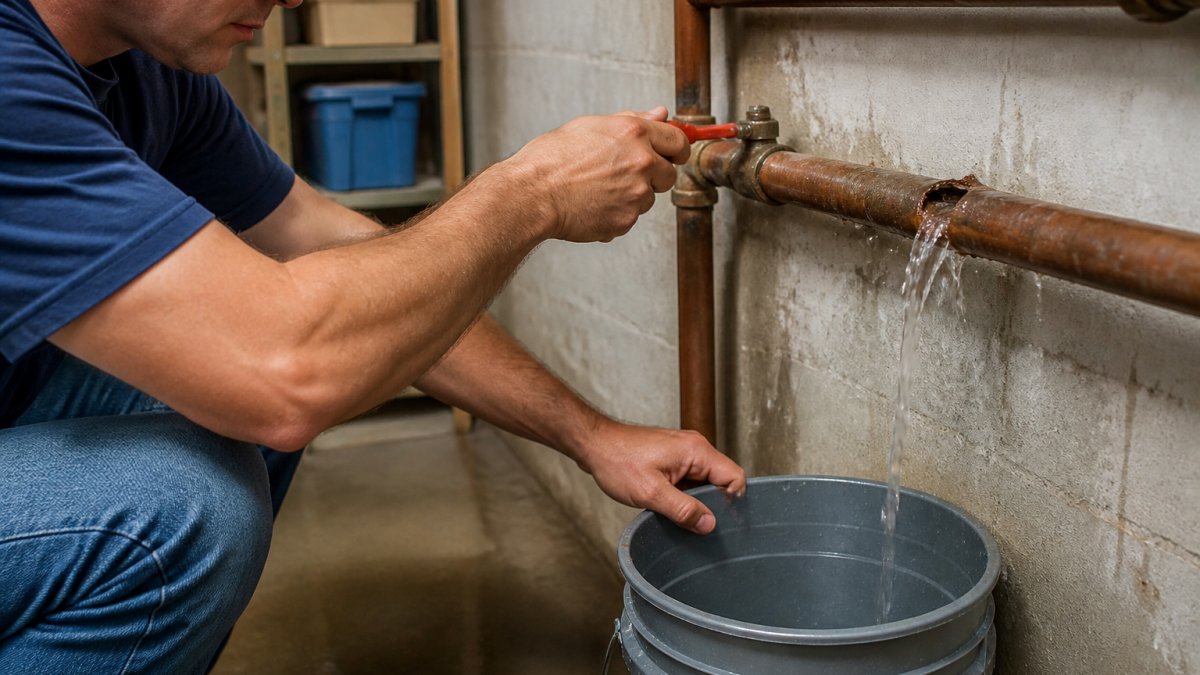
Table of Contents
- First Steps: How to Stop a Burst Pipe Before Damage Spreads
- How to Shut Off Water if a Pipe Bursts
- How to Drain Water Pipes After Shutting Off the Main
- How to Temporarily Seal a Burst Pipe
- Frozen Pipe Prevention and Repair
- When to Call an Emergency Plumber for a Burst Pipe
- Aftercare: Water Cleanup, Insurance, and Prevention
- Frequently Asked Questions
Last Updated: October 12, 2026
First Steps: How to Stop a Burst Pipe Before Damage Spreads
Water is pouring through your ceiling and you have minutes, not hours, to act. Knowing how to stop burst pipe damage fast comes down to three moves: cut the water, cut the power near the leak, and get the water out.
A burst pipe is a plumbing failure where water escapes through a crack or split in the pipe wall, usually caused by freezing, pressure buildup, or corrosion. The pipe itself is rarely the real emergency. The water is.
Here is the priority order when you walk into the mess:
- Get everyone away from standing water and exposed wiring
- Shut off the main water supply
- Kill power to any flooded area at the breaker
- Drain the remaining water from the pipes
- Contain and clean up what has already escaped
Skip step one and you risk far more than a wet floor.
Stay Safe: Electrical and Contamination Hazards
Electricity and dirty water are the two dangers most people ignore in a panic. If water is anywhere near outlets, appliances, or a fuse panel, do not walk through it.
Flood water is not clean. It can carry sewage, rust, and bacteria from inside old pipes. Wear gloves and boots if you have them. Wash your hands after cleanup, and throw out any food or medication that touched the water.
Never stand in standing water to reach a shut-off valve if the area has live outlets or a running appliance. Turn off the breaker first. Electrocution, not water damage, is the fastest way to turn a bad day into a tragedy.
How to Shut Off Water if a Pipe Bursts
Shutting off the water is the single most important step to stop burst pipe flooding. Every second the main stays open, more water pushes through the split and into your walls, ceilings, and floors. The goal is to stop the supply at its source, not to chase the leak with towels.
Here is the sequence:
- Close the main shut-off valve by turning the handle clockwise until it stops.
- If the main will not close, close the fixture shutoff under the nearest sink or toilet instead, this isolates that branch line.
- If the leak is on a hot-water line, close the valve on the cold-water inlet pipe above your water heater.
- Open the lowest faucet in the house to drain residual pressure.
Locating the Main Shut-Off Valve in Your Home
The main shut-off valve sits where the water service line enters the house. In most homes that is a basement, crawlspace, or utility room near the water meter. In warmer regions it may be outside in a covered box near the foundation, or in a garage wall.
Look for one of three valve types:
- Ball valve, a lever handle. The handle is parallel to the pipe when open and perpendicular when closed. A quarter turn shuts it off.
- Gate valve, a round wheel. Turn clockwise several full rotations to close. These are common in older homes and seize if they are never exercised.
- Stop-and-waste valve, a wheel with a small side cap, often found on older service lines. Closing it also drains the line downstream.
If the valve is behind a finished wall, under insulation, or buried, do not start cutting drywall during a flood. Shut off at the meter instead, or call a plumber.
If the Valve Is Stuck or Inaccessible
A valve that has not been turned in years often will not budge.
Work through these options in order:
- Apply steady, firm pressure by hand first. Gate valves sometimes free up after a quarter turn.
- If the handle spins without resistance, the stem or gate may be stripped. Stop and call a plumber.
- If the valve is behind a panel, remove only the access cover, never cut into a wall you cannot see behind.
- If the main is outside and the curb-stop key is missing, call your municipal water utility. Many will shut off at the curb on an emergency basis.
Once the water stops, open the lowest faucet in the house, usually in a basement or ground-floor sink. This drains the pipes and relieves pressure so the leak slows to a drip.
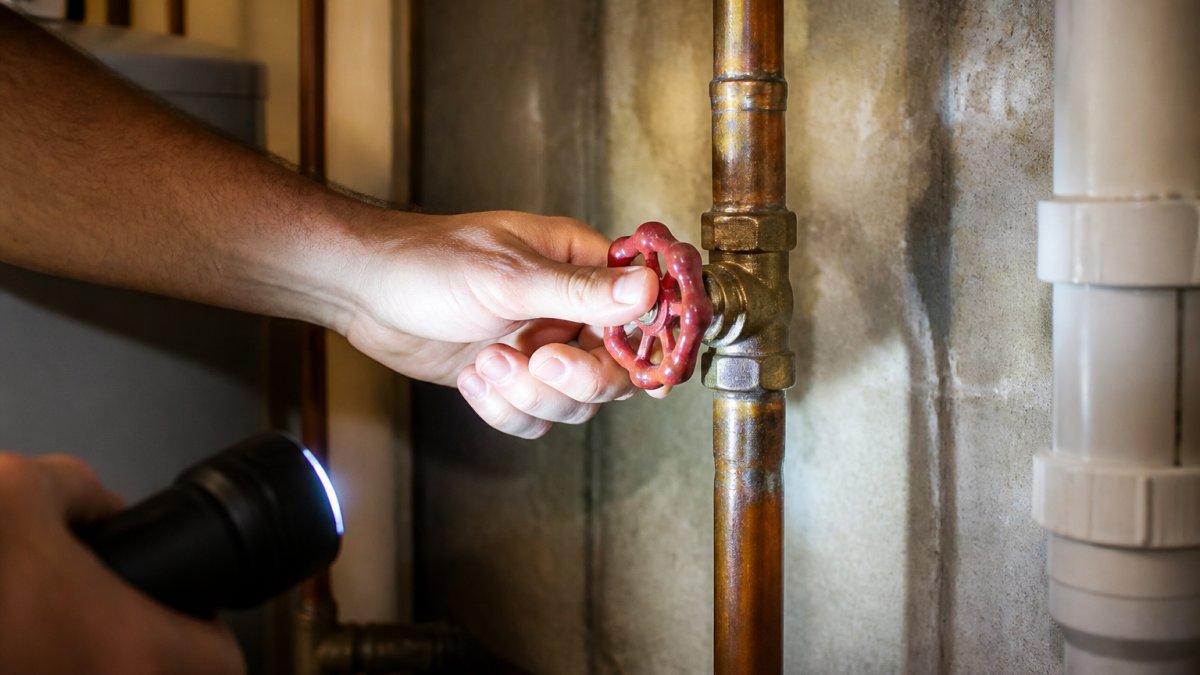
Test your main valve twice a year. Open and close it fully so it does not seize. Tag it with a bright zip tie or label so anyone in the house can find it in the dark.
How to Drain Water Pipes After Shutting Off the Main
Draining the pipes after shut-off stops the last of the water from leaking into your walls.
Then open the drain valve at the bottom of your water heater if it has one. This releases pressure trapped in the system.
Expect the dripping at the leak to slow, then stop. If water keeps flowing, your main valve may not be fully closed.
How to Temporarily Seal a Burst Pipe
A temporary seal buys you time until a plumber arrives. For a small crack, wrap the pipe tightly with self-fusing silicone tape, starting an inch past the split on each side.
For a larger split, a piece of rubber from an old inner tube or a garden hose, clamped down hard, will slow the flow. Dry the pipe first. Tape and patches do not stick to wet metal.
What Temporary Repairs Can and Cannot Fix
A patch is a stopgap, not a repair. It can hold back a slow drip for hours. It will not survive full water pressure for long, and it will not fix a corroded or frozen pipe.
| Situation | Temporary Fix | How Long It Holds | Real Fix Needed |
|---|---|---|---|
| Pinhole leak | Rubber patch + clamp | Hours to a day | Pipe section replacement |
| Small crack | Self-fusing silicone tape | A few hours | Cut and replace section |
| Large split | Clamp + rubber sleeve | Minutes to hours | Full pipe replacement |
| Frozen pipe | Thaw + insulation | Until next freeze | Insulation + heat tape |
Keep a roll of self-fusing silicone tape and two hose clamps in your utility room. They cost little, take up no space, and can hold a crack long enough for a plumber to arrive. Most homeowners only buy them after the first flood.
Frozen Pipe Prevention and Repair
Frozen pipes are the leading cause of burst pipes in cold weather. Water expands as it freezes, and that pressure splits the pipe wall. The leak often shows up only when the ice thaws.
Prevention is cheaper than repair:
- Insulate exposed pipes in basements, crawlspaces, and attics
- Seal drafts around windows, doors, and where pipes enter exterior walls
- Keep indoor temperature at least 13°C, even when you are away
- Let a faucet drip during deep cold snaps to keep water moving
Safe Thawing Methods for Frozen Pipes
Thaw a frozen pipe with warm air, never an open flame. Use a hair dryer, a space heater, or towels soaked in hot water.
Watch for the moment water starts flowing. That is when a hidden crack can open up and spray.
Never use a blowtorch or propane torch on a pipe. You can ignite insulation or melt solder joints and turn a frozen pipe into a burst one.
When to Call an Emergency Plumber for a Burst Pipe
Call a plumber immediately if you cannot find the main valve, the valve will not close, or the leak is behind a wall or under a slab.
You should also call if the pipe is galvanized or severely corroded. Patching a failing pipe just moves the next leak a few feet down the line.
At Spencer4Hire Plumbing, we run true 24/7 emergency service with licensed and insured plumbers.
Aftercare: Water Cleanup, Insurance, and Prevention
Cleanup starts as soon as the water stops. The first 24 to 48 hours decide whether you are drying a room or replacing it. Mold can begin colonizing damp drywall, carpet, and framing within a day or two, and the longer water sits in a wall cavity, the more structural material it ruins.
Drying Out the Space
- Remove standing water with a wet vacuum, mop, or towels. Do not leave puddles under furniture or appliances.
- Pull up saturated carpet and underpad. If the pad is soaked, it usually cannot be saved.
- Run fans and a dehumidifier continuously. Keep windows closed in humid weather so you are not pulling moisture back in.
- Remove baseboards or drill small weep holes if water is trapped behind drywall. A moisture meter, often available at hardware stores, tells you when a wall is actually dry.
If the leak came from a drain, sewer, or toilet line, treat the water as contaminated. Wear gloves and boots, bag and discard porous items, and disinfect hard surfaces with a household bleach solution. Do not run a standard household fan over sewage-contaminated water, it can aerosolize bacteria.
Documenting Damage for Your Insurer
Most home insurance policies in Canada cover sudden and accidental burst-pipe damage, but they expect proof and prompt notice. Do this before you throw anything out:
- Photograph and video the leak location, the water line on walls, and every damaged item.
- Keep receipts for emergency repairs, hotel stays, and replacement items.
- Write down the date and time you discovered the leak and when you shut off the water.
- Call your insurer the same day. Most policies require prompt notice, and delays can complicate a claim.
- Keep the damaged items until the adjuster says you can discard them.
A common pattern is that insurers cover the sudden water damage but not the pipe repair itself if wear, corrosion, or freezing was the root cause. Read your policy or ask your adjuster directly which portion is covered. If you rent, your tenant insurance handles your belongings while the landlord’s policy handles the building.
Photograph first, discard second. The photos are the difference between a paid claim and a disputed one.
Preventing the Next Burst
Long term, book a plumbing inspection. A licensed plumber can spot corroded pipes, weak joints, and freeze risks before they fail. Insulate exposed pipes in basements, crawlspaces, and attics, seal drafts where pipes enter exterior walls, and keep indoor temperatures consistent. It is the cheapest insurance you will ever buy against a flooded basement.
Frequently Asked Questions
What should I do first when a pipe bursts?
Shut off the main water supply immediately. This stops water from flowing to the damaged pipe and limits flooding. If the burst pipe is near electrical outlets, panels, or appliances, do not touch anything wet. Turn off the electricity at the breaker panel only if you can reach it safely without stepping in standing water. Once the water is off, open nearby faucets to drain remaining pressure, then call an emergency plumber.
How do I temporarily stop a burst pipe from leaking?
After shutting off the main water valve and draining the lines, dry the pipe surface. Wrap the damaged section tightly with self-fusing silicone tape or rubber and hose clamps. For a pinhole leak, a piece of rubber secured with a C-clamp can slow the flow. These are short-term fixes only. A burst pipe needs a permanent plumbing repair, so schedule a licensed plumber as soon as possible.
Is it safe to use electricity near a burst pipe?
No. Water and electricity together create a serious shock hazard. If water is pooling near outlets, appliances, or your electrical panel, do not enter the area. Shut off power at the breaker only if you can safely reach the panel without walking through standing water. When in doubt, leave the building and call 911 or your utility provider before re-entering.
How do I prevent frozen pipes during cold weather?
Keep your indoor temperature at 13°C or higher, even when away. Insulate exposed pipes in basements, crawl spaces, and along exterior walls. Seal drafts around windows, doors, and where pipes enter the home. On nights below -15°C, let a faucet drip slightly to keep water moving. Disconnect outdoor hoses and shut off exterior spigots before the first freeze to avoid pipe freezing.
A burst pipe never waits for a convenient moment, and the damage it leaves behind can cost far more than the repair itself. Spencer4Hire Plumbing offers true 24/7 emergency response, licensed and insured plumbers, and clear quotes with no hidden fees, so you know exactly what you are paying for. We handle everything from emergency leak repairs to full repiping and preventive inspections. Call Now and get your plumbing fixed right the first time.