Table of Contents
- What a Full Home Repiping Service Actually Costs
- How to Read a House Repiping Estimate
- Copper vs. PEX Repiping Cost: Which Material Fits Your Budget?
- How Long Does It Take to Repipe a House?
- Signs a House Needs Repiping Instead of Another Repair
- Restoration, Permits, and Hidden Costs Homeowners Miss
- How to Compare Repiping Quotes and Pay for the Work
- Frequently Asked Questions
Last Updated: October 14, 2026
What a Full Home Repiping Service Actually Costs
The cost of full home repiping service in 2026 depends on your home’s size, pipe material, and how easily a plumber can reach the lines.
At Spencer4Hire Plumbing, we quote repiping work every week, and the honest answer is that a firm number only exists after someone walks your basement and counts your fixtures.

What Drives the Price Up or Down
Five variables move a repiping quote more than anything else:
- Home size and fixture count. More bathrooms, kitchens, and laundry rooms mean more pipe runs and more labour hours.
- Pipe material. Copper and PEX carry different material and installation costs.
- Access. Open basements are quick. Finished ceilings and tiled walls slow everything down.
Labour, not pipe, is the biggest line on a repiping invoice. Two homes the same size can differ by thousands of dollars purely because one has an open ceiling and the other doesn’t.
How to Read a House Repiping Estimate
A house repiping estimate is a written breakdown of labour, materials, permits, and restoration, not a single lump sum. If a quote arrives as one number on a business card, you cannot compare it to anything, and you have no protection if the scope changes mid-job.
What a Transparent Quote Should List
A quote you can actually trust separates the job into clear parts:
- Linear metres of pipe to be replaced, by material
- Labour hours or a stated crew-day rate
- Permit and inspection fees, listed separately
A Sample Itemized Estimate You Can Compare Against
Most contractors quote a full repipe as a single range, which makes apples-to-apples comparison impossible. The structure below shows how a realistic estimate is assembled. The percentages are typical proportions, not fixed prices, your own quote will scale with home size, access, and material.
| Line Item | What It Covers | Typical Share of Total | Why It Matters |
|---|---|---|---|
| Pipe and fittings | Copper or PEX, by linear metre, plus elbows, tees, and adapters | Roughly 20-30% | Material choice swings the total more than any other line |
| Labour | Crew hours or day rate for rough-in and fixture connection | Roughly 40-55% | Usually the largest cost; access drives the hours |
| Permit and inspection | Municipal fee plus inspector’s time | Small but fixed | Confirms the job is legal and insurable |
| Access and restoration | Drywall, ceiling, tile, paint, flooring | Roughly 10-25% | The hidden cost most quotes omit |
| Fixture reconnect | Taps, toilets, shut-offs, supply lines | Small per fixture | Prevents leaks at old connections |
| Disposal and cleanup | Old pipe removal, debris haul-away, site protection | Minor | Shows up on some invoices, not others |
When you compare two quotes, convert each to this same six-line structure. If one quote has five lines and the other has three, the missing lines are where the price difference hides.
Questions That Force a Real Number
Ask these before you sign, and ask for the answers in writing:
- How many linear metres of pipe, and in what material?
- How many crew members, for how many days?
- Is the permit fee included, and who pulls it?
A contractor who can answer all five without hedging has priced the job. One who cannot has given you a placeholder.
A quote that excludes restoration is not a cheaper quote. It just moves the drywall repair bill to a separate contractor you still have to hire and schedule, often at a higher rate than the plumber would have charged.
Copper vs. PEX Repiping Cost: Which Material Fits Your Budget?
PEX generally costs less than copper on both material and labour, and it is the default choice for most full repipes in 2026. Copper still earns its place in certain homes, and the gap between the two is smaller than the marketing suggests.
The trade-offs come down to four factors:
- Material price. Copper is a commodity metal, so its price moves with the market. PEX is manufactured and stable.
- Installation speed. PEX bends around corners, so a crew threads fewer fittings and finishes sooner.
- Fittings and joints. Copper is soldered; PEX uses crimp or expansion fittings. Fewer joints means fewer future leak points.
For a house repiping estimate, ask your plumber to price both materials on the same scope. The difference is often smaller than homeowners expect, and seeing the two numbers side by side makes the decision obvious.
How Long Does It Take to Repipe a House?
A typical full repipe takes two to five working days for an average single-family home. Small condos and townhouses can finish in one to two days, while large multi-storey homes with finished walls stretch toward a week.
Three things stretch the timeline:
- Wall and ceiling access. Opening and closing finished surfaces adds days.
- Crew size. A two-plumber crew on a simple layout moves fast; a complex job needs more hands.
- Inspection scheduling. The final inspection depends on your municipality’s availability, not the plumber’s.
Plan for water to be off during working hours and for some noise and dust. If you have a second bathroom, the disruption is manageable.
Signs a House Needs Repiping Instead of Another Repair
Repiping makes more sense than another patch when the problems are systemic, not isolated. One leaking joint is a repair. Rust-coloured water from every tap is a repipe.
Watch for these signals:
- Brown or rusty water at multiple fixtures, especially after a weekend away
- Repeated leaks in different parts of the house within a year or two
- Visible corrosion, pitting, or green staining on exposed copper
If your home still has Poly B or galvanized steel, get a written pipe condition assessment before you spend money on another repair. Patching a failing system usually costs more over three years than replacing it once.
Restoration, Permits, and Hidden Costs Homeowners Miss
The line items homeowners forget are the ones that turn a fair quote into a shock. Restoration, permits, disposal, and disruption are real costs, and they belong in the conversation before work starts.
Restoration: What Actually Gets Opened and Closed
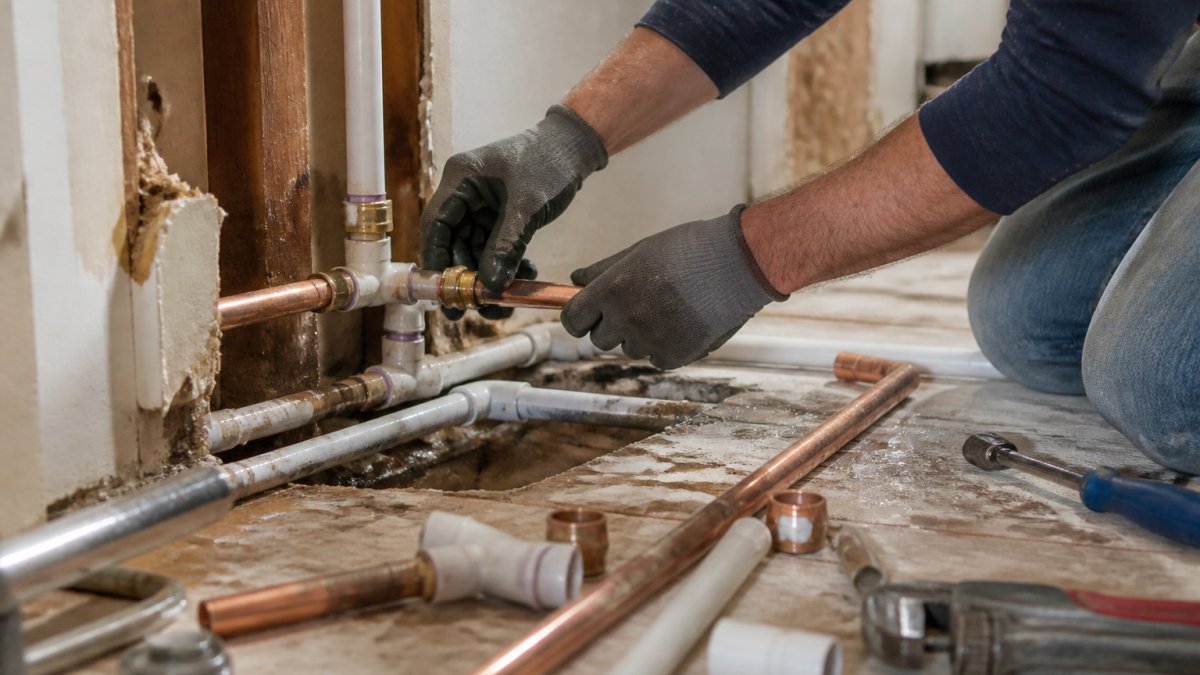
A full repipe means cutting into finished surfaces to reach the lines. What gets opened depends on how the house was built:
- Drywall and ceiling repair. Every access opening has to be patched, taped, sanded, and painted. Some plumbers include this; many don’t.
- Tile and flooring. A repipe behind a tiled shower wall means removing and replacing tile, which is a specialist trade and rarely included.
- Paint matching. Even a perfect drywall patch shows if the paint doesn’t match. Ask whether painting is in scope.
- Floor and furniture protection. Moving furniture, laying drop cloths, and protecting floors is labour, and it appears on some quotes as a separate line.
A common pattern is that restoration is quoted as a separate allowance rather than a fixed price, because nobody knows how many openings a wall will need until the wall is open. Ask for that allowance in writing so you can budget for the upper end.
Permits, Inspection, and Disposal
- Permit and inspection fees. Required for a full repipe and paid to your municipality. Requirements and fees are set locally, so confirm current rules with your own municipal office before signing. Your plumber should pull the permit, not leave it to you.
- Old pipe disposal. Minor, but it appears on some invoices and not others.
- Temporary water shut-off. Not a fee, but a disruption cost if you need alternate accommodation while the water is off.
Financing and Insurance: What Usually Is and Isn’t Covered
A full repipe is a large enough expense that payment structure matters as much as price.
- Payment schedule. Most homeowners pay a deposit, one or more progress payments, and a final balance on completion. Be cautious of any request for full payment upfront.
- Financing. Many plumbing companies offer financing or work with a third-party lender, which spreads the cost over months. Ask about the interest rate and whether there is a prepayment penalty before you sign.
- Home insurance. Most policies cover sudden water damage from a failed pipe, not the pipe replacement itself. Coverage for the resulting damage and for the repipe can differ by policy, so read the wording and call your insurer before work starts.
- Home warranty programs. Some cover repair or replacement of specified systems, but exclusions for older materials are common. Confirm in writing whether your program covers a repipe.
Before you approve any repipe, ask your insurer two questions in writing: does my policy cover the water damage if a pipe fails during the job, and does it cover any part of the pipe replacement itself? The answers decide how much of the total you actually pay.
A Disruption Budget, Not Just a Cost Budget
Plan for water to be off during working hours, for noise and dust, and for at least one bathroom to be out of service on any given day. If you have a second bathroom, the disruption is manageable. If you don’t, budget for a few nights elsewhere or ask your plumber to stage the work so one fixture stays live.
How to Compare Repiping Quotes and Pay for the Work
Comparing repiping quotes properly means comparing scope, not totals. Two quotes for the same house can differ by thousands simply because one excludes restoration.
Use this checklist when you review each quote:
- Is the scope stated as full repipe or partial?
- Is the pipe material named, with linear metres listed?
- Is labour shown as hours or a crew-day rate?
- Are permit and inspection fees included?
For payment, most homeowners pay a deposit, a progress payment, and a final balance on completion.
If you want a straight answer on your own home rather than a generic range, Canada Mortgage and Housing Corporation guidance on home maintenance and renovation is a useful starting point for planning major work, and the Government of Canada’s consumer protection information explains your rights when hiring a contractor.
A full repipe is one of the few home projects where the cheapest quote usually costs the most, because the savings come from skipping restoration, permits, or proper materials.
Frequently Asked Questions
What factors affect the cost of a full home repipe?
The biggest drivers are home size and layout, the number of bathrooms and fixtures, pipe material, and how easily the plumber can reach the existing lines. Finished walls, ceilings, and slab construction add labour because the crew has to open and later close more surfaces. Older homes may also need extra work if galvanized or Poly B piping has corroded fittings. Regional labour rates, permit fees, and whether you choose copper or PEX all shift the final number, which is why an on-site quote matters more than any online average.
Is copper or PEX cheaper for repiping a house?
PEX typically costs less than copper on both materials and labour because it bends around corners, needs fewer fittings, and installs faster. Copper lasts longer and handles higher heat, but the material price is higher and the installation takes more time. For most homeowners replacing aging supply lines, PEX offers the lower upfront cost while copper appeals when resale value or specific fixture requirements matter. Ask your plumber to quote both options side by side so you can weigh upfront price against expected lifespan.
How long does it take to repipe a house?
Most whole-home repiping projects take two to five working days, depending on square footage, the number of bathrooms, and how much wall access the crew needs. A small bungalow with an unfinished basement can finish in two days. A multi-storey home with finished ceilings and several bathrooms often runs the full week. Restoration work like drywall patching and painting usually happens after the plumbing passes inspection, so plan for a few extra days before everything looks normal again.
Can you live in your home during repiping?
Yes, most homeowners stay in the house during a repipe. Water is shut off for several hours at a time while lines are cut and reconnected, so plan around morning routines and stock water for drinking and cooking. Plumbers typically restore water by the end of each workday. Expect noise, dust from wall openings, and furniture moved away from work areas. If your home has only one bathroom or a medical need for constant water, ask your plumber about scheduling the work in stages.