Table of Contents
- Why Hiring Licensed Plumbers in Kanata Matters
- How to Choose a Plumber: A Step-by-Step Approach
- Your Plumber Quote Checklist: What Every Estimate Should Include
- Emergency Plumber Kanata: What to Expect When You Call at 2 AM
- Matching the Plumber to the Job: Repairs, Renovations, and Water Heaters
- Red Flags, Contract Protections, and Local Service-Area Checks
- Conclusion
- Frequently Asked Questions
Last Updated: October 16, 2026
Why Hiring Licensed Plumbers in Kanata Matters
Hiring licensed plumbers in Kanata is the most reliable way to protect your home from costly water damage, failed inspections, and repeat repairs. A licensed plumber has proven their trade knowledge to Ontario’s regulator, carries mandatory insurance, and can pull renovation permits.
Licensed plumbers hold a valid Certificate of Qualification or provincial journeyperson licence. In Ontario, that credential is issued through the Ontario College of Trades framework and enforced by the Technical Standards and Safety Authority (TSSA) for fuel-related work, a distinction that matters when your job touches a water heater or gas line.
Licensing and Insurance: What Ontario Requires
Ontario requires anyone doing plumbing work for pay to hold a valid trade qualification, and any business offering it must carry liability insurance, the part homeowners forget.
Liability coverage is what pays out if a plumber floods your basement or cracks a fixture. Ask for a certificate of insurance before work starts, not after. The Ontario Ministry of Labour, Immigration, Training and Skills Development outlines how compulsory trades are regulated.
The most common mistake we see is a homeowner hiring on price alone and never asking for proof of insurance. If an uninsured worker damages your home, your own policy may be the one that pays.
How to Choose a Plumber: A Step-by-Step Approach
Choosing a plumber comes down to five checks: credentials, insurance, quote clarity, availability, and reviews. Run all five before you book.
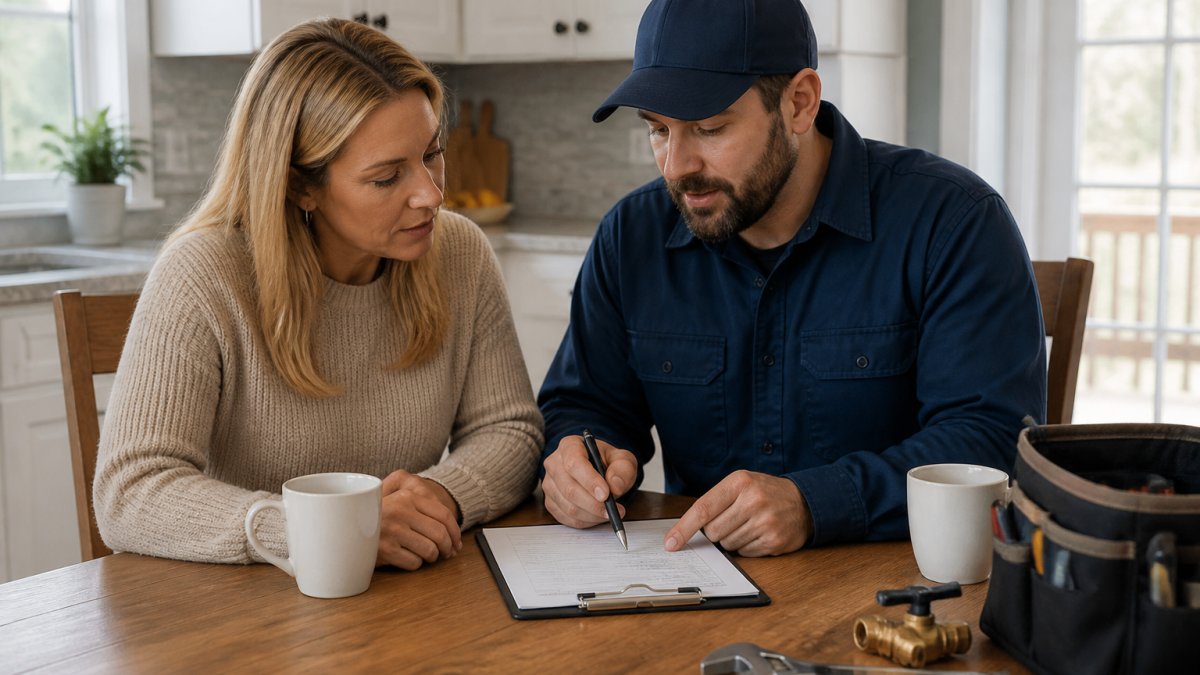
Here is the process we would follow in our own homes:
- Confirm the licence and insurance in writing
- Ask what the quote includes and what it excludes
- Check response times for emergencies
- Read recent customer reviews, not just star averages
- Get the scope of work in writing before anyone starts
How to Verify an Ontario Plumber’s Licence and Insurance
Verifying a plumber takes about ten minutes and two phone calls. Ask for the licence number, then confirm it with the issuing body. Ask for a certificate of insurance and call the insurer listed on it.
A legitimate contractor will send both without hesitation. Reluctance is your answer. For work involving gas or fuel-burning appliances, the Technical Standards and Safety Authority maintains records you can check.
Ask for the certificate of insurance to be sent directly from the insurer, not forwarded by the contractor. It takes one email and removes any doubt about whether coverage is current.
Your Plumber Quote Checklist: What Every Estimate Should Include
A plumbing quote should list labor, materials, permits, and a clear scope of work. If any are missing, you cannot compare it fairly against another bid.
Use this checklist when you review an estimate:
- Itemized labor and material costs
- Permit fees stated separately
- Scope of work in plain language
Affordable pricing is not the lowest number. It is the number that does not move once the work begins. Upfront pricing means you know the total before the first wrench turns.
Emergency Plumber Kanata: What to Expect When You Call at 2 AM
A genuine emergency plumber answers the phone at 2 AM, confirms the after-hours rate before dispatching, and can state the licence number of the technician on the way.
When you call, have three things ready: your address, the location of your main shut-off valve, and a description of what is happening.
Ask four questions before you agree to a dispatch:
- What is the after-hours call-out rate, and is it flat or hourly?
- How soon will a licensed technician arrive, and is that a window or a guess?
- What is the licence number of the technician being sent?
- Is the work covered by liability insurance, and can the certificate be emailed before arrival?
A reliable service answers all four directly. If the dispatcher dodges the licence or insurance question, call the next company.
What Counts as a Real Emergency
Not every problem needs a 2 AM call-out, and paying after-hours rates for a slow drain is an expensive habit. The jobs that genuinely cannot wait are:
- Burst or frozen pipe, water is actively escaping or the line has no flow in winter.
- Sewage backup, waste water is entering the home, which is a health hazard, not just a nuisance.
- No water anywhere, a failed main or a broken supply line that has shut the whole house down.
A dripping faucet, a running toilet, or a slow kitchen drain can almost always wait for a scheduled visit at standard rates.
Protecting Yourself on an After-Hours Call
Emergency pricing surprises homeowners most often. Before the technician starts, ask for the rate in writing, a text or email is fine, and confirm whether parts are billed separately. A common pattern is a flat call-out fee plus hourly labor plus materials; the flat fee is the number you can compare across companies.
Do not authorize work beyond the immediate emergency without a written scope and price. A technician who insists on replacing a whole fixture at 3 AM without a quote is creating a problem you will be negotiating about later.
If the technician cannot show a licence or proof of insurance on arrival, you may stop the work and pay only the call-out fee. Document the visit with photos and a written note; that record matters if you later dispute a charge or file an insurance claim.
A real emergency plumber answers the phone, states the rate, and can prove their credentials before the van arrives. If any of those three is missing, keep calling.
Matching the Plumber to the Job: Repairs, Renovations, and Water Heaters
Not every plumber fits every job. A drain-cleaning technician may not coordinate a basement renovation, and a renovation plumber may not carry emergency repair parts. Matching the job to the right specialist is the step most homeowners skip, and the one that determines whether the work passes inspection and holds up.
Use the table below as a starting point, then read the notes under it for the questions that actually separate one contractor from another.
| Job Type | What to Look For | Key Questions to Ask |
|---|---|---|
| Emergency repair | 24/7 availability, stocked truck, on-call licensed technician | What is the after-hours rate? What is the technician’s licence number? |
| Drain cleaning | Camera inspection equipment, sewer experience | Do you scope the line before clearing it? What is the cost if the blockage returns? |
| Water heater | TSSA-recognized fuel credentials where gas is involved, permit experience | Who pulls the permit? What is the warranty on the tank and on the labor? |
| Basement renovation | Permit coordination, rough-in and venting experience | How do you sequence with the general contractor and the inspector? |
| Laundry room plumbing | Rough-in, drain venting, and supply-line knowledge | Is the drain vented to code? Will you provide a rough-in diagram? |
| Bathroom or kitchen remodel | Fixture installation, relocation of supply and drain lines | Are fixture cut-offs included? Who handles drywall patching? |
Emergency Repairs
For an emergency, availability and credentials matter more than price. Ask whether the dispatched technician is a licensed journeyperson or a supervised apprentice, and confirm the company carries liability insurance. A stocked truck matters too, leaving for parts turns a two-hour job into a five-hour one at after-hours rates.
Drain Cleaning and Sewer Work
A drain that keeps backing up usually has a cause deeper in the line. Ask whether the company scopes the line with a camera before or after clearing it, and whether the scope is included or billed separately, clearing a blockage without looking at the pipe may treat only a symptom. For older homes, ask about the sewer line material; clay and cast iron fail differently than modern plastic, and the repair approach changes.
Water Heaters
Water heater work splits into electric and gas. Gas work requires fuel-related credentials recognized by the Technical Standards and Safety Authority, and the installer should explain who pulls the permit and books the inspection. Ask about the warranty on both tank and labor, a ten-year tank warranty means little if the installer covers their work for only ninety days. For replacements, ask whether the old unit is hauled away and whether the new one meets current venting and clearance code.
Basement Renovations
Basement renovation plumbing requires permits, inspections, and coordination with your general contractor. The rough-in must be inspected before the walls close, so sequencing is everything. An experienced plumber knows the inspection timelines, what the code officer looks for, and how to schedule around the other trades.
Ask three questions before hiring for a renovation:
- Who pulls the plumbing permit, you or the plumber?
- Who books the rough-in and final inspections?
- How do you coordinate with the general contractor when the schedule slips?
On any renovation, confirm in writing who pulls the permit and who books the inspection. Ambiguity here is the most common cause of a stalled basement project.
Routine Repairs and Small Jobs
For a leaking faucet, running toilet, or single fixture replacement, the priority shifts to scheduling and upfront pricing. Ask whether the company charges a minimum visit fee, whether the quote is flat-rate or hourly, and whether the technician carries common parts. A flat-rate quote is easier to compare than an hourly estimate that depends on how long the work takes.
Matching Experience to Your Home
Older homes often have galvanized supply lines, cast iron drains, or non-standard fixture spacing. Ask any contractor how much of their work is in homes of similar age and construction. A plumber who mostly works in new builds may excel at rough-ins but be less familiar with mid-century quirks, an experience gap that shows up in how long a job takes and how many surprises appear once the wall is open.
For any job beyond a simple repair, ask for two or three recent references from work similar to yours. A quick call to a past customer tells you more about reliability and cleanup than any review score.
Red Flags, Contract Protections, and Local Service-Area Checks
Red flags in plumbing hiring are consistent: cash-only demands, no written quote, pressure to decide on the spot, and no verifiable licence. Any one is enough to walk away.
Before you sign, confirm the service area. A company that lists your town should reach you quickly for emergencies, ask how many crews cover your area and what the realistic response window is.
Contract protections to insist on:
- A written scope of work
- A payment schedule tied to completed milestones
- A stated warranty period on labor and parts
Read reviews with a critical eye: look for patterns across many reviews, not one glowing post. Reputation builds over years of consistent service.
Conclusion
Finding a plumber you can trust should not feel like a gamble.
At Spencer4Hire Plumbing, our licensed and insured plumbers offer true 24/7 emergency response, same-day or next-day service, and clear quotes with no hidden fees.
Get started with Spencer4Hire Plumbing and get your plumbing fixed right the first time. Call now to book a visit or request a quote.
Frequently Asked Questions
How do I verify that a plumber is licensed in Ontario?
Ask for their Ontario licence number and check it through the provincial licensing body that regulates plumbers. A legitimate licensed plumber will provide this without hesitation. Also request a certificate of insurance showing liability coverage and WSIB clearance. If a plumber cannot produce these documents or gives vague answers, treat it as a warning sign and look elsewhere before any work begins.
What should a plumbing estimate include before I sign anything?
A complete estimate should list the scope of work, materials to be used, labour breakdown, permit costs if applicable, and a timeline. It should state whether the price is fixed or hourly and what triggers additional charges. Ask specifically about disposal fees, after-hours rates, and warranty terms. Getting this in writing protects you if the final invoice differs from what was discussed on site.
How quickly can an emergency plumber in Kanata respond to a burst pipe?
Response times vary by provider and time of day. A true 24/7 emergency plumber Kanata service should answer the phone immediately, not route you to voicemail. Ask upfront about after-hours rates so you are not surprised by the bill. While waiting, shut off your main water valve to limit damage. Keep the number of a licensed emergency plumber saved before you need it.
Should I hire a licensed and insured plumber for a small repair?
Yes. Even minor repairs can go wrong and cause water damage that costs far more than the original fix. A licensed and insured plumber carries liability coverage, which protects you if something is damaged during the job. Insurance also covers the plumber’s own safety. For any work involving water lines, drains, or fixtures, hiring a licensed professional is the safer and often cheaper choice long term.