Table of Contents
- Signs Your Home Needs Residential Plumbing System Upgrades
- Benefits of Installing a Tankless Water Heater
- Poly-B Pipe Replacement: Why It Can’t Wait
- What a Residential Protective Plumbing Program Covers
- How to Choose the Right Plumbing System Upgrades
- What Residential Plumbing System Upgrades Cost
- Frequently Asked Questions
Last Updated: September 30, 2026
Signs Your Home Needs Residential Plumbing System Upgrades
Residential plumbing system upgrades are planned replacements or additions to a home’s water supply, drainage, or heating equipment, made before a failure forces the issue. At Spencer4Hire Plumbing, we see the same pattern across older homes in the region: pipes and fixtures that worked fine for decades start showing stress all at once.
The clearest warning signs include:
- Discolored water or a metallic taste when you turn on a tap
- Rust-colored staining around pipe joints or under sinks
- Water pressure that drops noticeably when two fixtures run at once
- Slow drains that return within weeks of being cleared
- Pipes that sweat, rattle, or freeze during cold snaps
- A water heater that needs frequent repairs
One or two of these usually points to a single worn component. Three or more together suggest the system itself is nearing the end of its service life.
What most homeowners miss is that these symptoms rarely appear in isolation. A pinhole leak in one section of pipe often means the rest of the run is the same age and the same condition.
Waiting for a pipe to burst before acting is the most expensive way to handle aging plumbing. Emergency repairs cost more than planned ones, and the water damage behind walls and under floors adds a second bill on top of the plumbing work.
Benefits of Installing a Tankless Water Heater
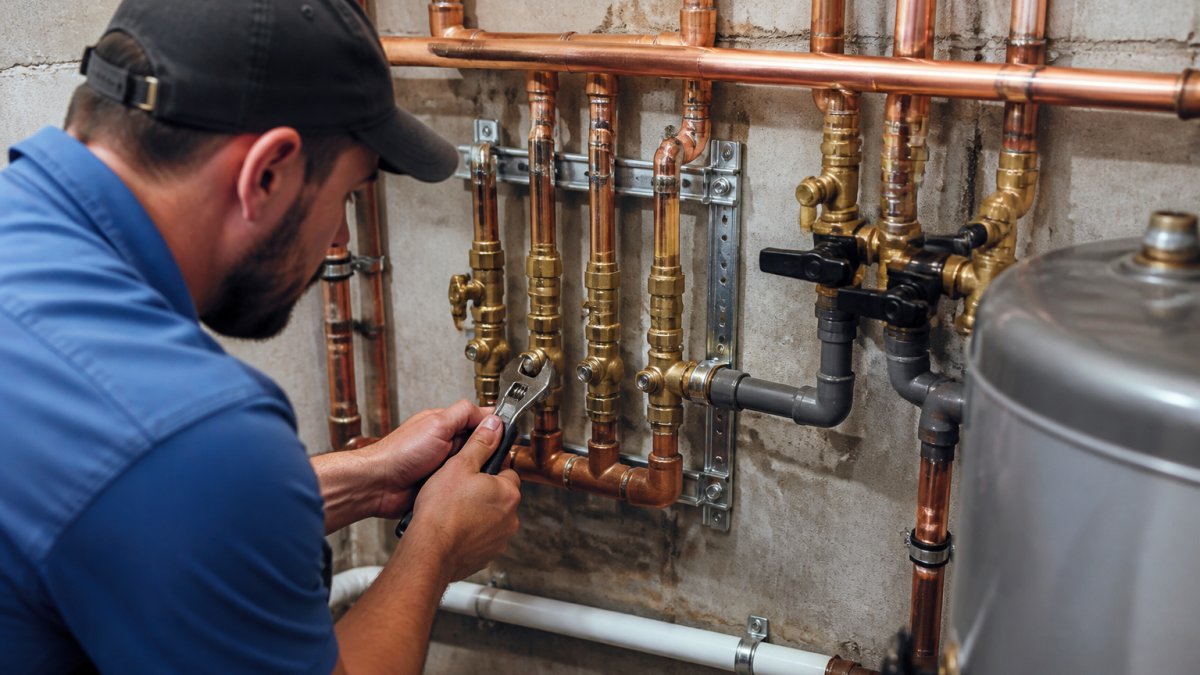
A tankless water heater heats water on demand rather than storing it in a tank, which changes how your home uses both space and energy. For households that currently run out of hot water during morning showers, that alone is often reason enough to switch.
The practical benefits homeowners ask about most:
- Endless hot water for back-to-back showers and laundry
- Lower standby losses, since there is no tank sitting hot all day
- A fraction of the footprint, freeing up closet or basement space
- Longer service life than a conventional tank in most installations
- Zoned control, so you can add a unit near a distant bathroom
The trade-off is real, though. Tankless units need adequate gas supply and venting, and in a cold climate the incoming groundwater temperature affects how much hot water a given unit can deliver. Sizing matters more than the brand name on the box.
A common mistake is buying the largest unit available rather than the one matched to your household’s peak demand and your incoming water temperature.
Poly-B Pipe Replacement: Why It Can’t Wait
Poly-B pipe replacement is the removal of grey polybutylene supply lines and their replacement with PEX or copper. These pipes were installed widely in homes built or renovated during the 1980s and 1990s, and they are now well past the age where failures become common.
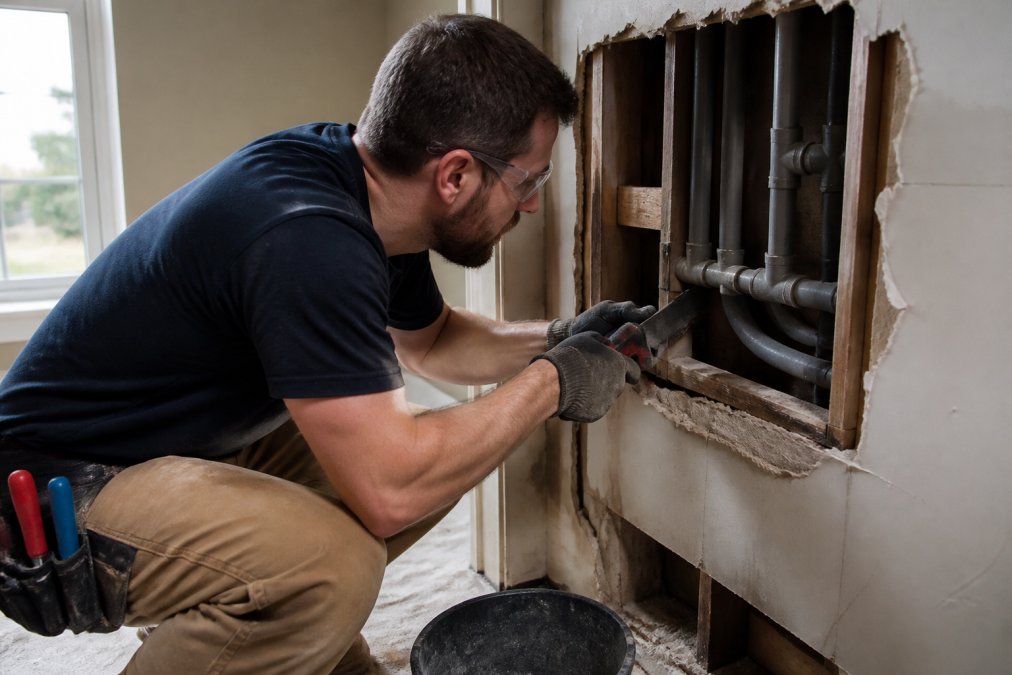
The problem is not that every Poly-B pipe fails on a schedule. It is that the failure mode is sudden and internal. The pipe degrades from the inside, often near fittings and elbows, and the first sign is frequently a burst line rather than a slow drip you can catch early.
That is why we treat Poly-B as a replace-on-your-terms situation rather than a wait-and-see one. A planned repipe lets you choose the timing, protect finished basement ceilings and drywall, and avoid a mid-winter emergency.
If your home was built in that era and you have never had the supply lines inspected, a professional assessment is the sensible first step. It costs far less than a water damage claim.
What a Residential Protective Plumbing Program Covers
A residential protective plumbing program is a municipal or regional initiative that helps homeowners reduce the risk of basement flooding and sewage backup by funding or rebating protective devices. These programs typically cover a portion of the cost of installing backwater valves, sump pumps, and related plumbing work.
Coverage varies by municipality, so the details that matter are the ones in your own area’s program documentation. In general, these programs address:
- Backwater valves, which stop sewage from reversing into your basement during a surcharge
- Sump pumps and weeping tile connections, which manage groundwater around the foundation
- Downspout disconnection and lot grading improvements
- Sewer line inspection to confirm the work is needed and correctly installed
The application process usually requires a licensed plumber to do the work, a permit where applicable, and documentation submitted after completion. Rebate amounts, eligibility rules, and deadlines change from year to year, so confirm current terms with your municipality before you book the work.
Get the program paperwork in hand before the plumber arrives. Most programs require pre-approval or specific documentation, and work done outside the program’s rules may not qualify for the rebate even if the installation itself is correct.
How to Choose the Right Plumbing System Upgrades
Choosing the right plumbing system upgrades comes down to matching the work to your home’s actual condition, not to a generic checklist. Start with an inspection, then prioritize by risk and budget.
A simple way to decide:
| Priority | Situation | Recommended Action |
|---|---|---|
| Urgent | Poly-B or galvanized supply lines, active leaks | Full or partial repipe |
| High | Aging water heater, recurring repairs | Tankless or tank replacement |
| High | History of basement flooding | Backwater valve, sump pump |
| Medium | Low pressure, noisy pipes | Pressure assessment, pipe sizing |
| Planned | Renovation or fixture upgrade | Rough-in and fixture replacement |
Work through it in this order:
- Get a licensed inspection of supply lines, drains, and the water heater.
- Separate must-do from nice-to-do. Safety and water damage risk come first.
- Check rebate eligibility for protective devices before scheduling.
- Ask for a written quote that lists parts, labour, and permits separately.
- Confirm licensing and insurance before anyone starts work.
The real difference between a good outcome and a costly one is usually the quality of the inspection, not the price of the quote.
What Residential Plumbing System Upgrades Cost
Residential plumbing system upgrades cost varies widely based on the scope of work, the age and layout of your home, and whether walls or ceilings need to be opened. There is no single figure that applies across the board.
The factors that move the number most:
- Access. Pipes behind finished walls or in slab floors take longer to reach.
- Scope. A single fixture replacement is a fraction of a full repipe.
- Materials. PEX, copper, and specialty fittings carry different costs.
- Permits and inspection. Required in most municipalities for this work.
- Rebates. Protective plumbing programs can offset part of the cost.
Because pricing depends on your home’s specifics, the honest answer is a quote, not a guess. Spencer4Hire Plumbing provides clear quotes with no hidden fees once the scope is confirmed.
Canada Mortgage and Housing Corporation guidance on home plumbing and water damage prevention
Aging plumbing rarely announces itself until the worst possible moment, and the difference between a planned upgrade and an emergency repair is usually measured in water damage. Spencer4Hire Plumbing provides licensed, insured plumbers, true 24/7 emergency service, and same-day or next-day appointments, with clear quotes and no hidden fees. If your home shows any of the warning signs above, get an inspection before the next cold snap. Call Spencer4Hire Plumbing and get your plumbing system upgrades done right the first time.
Frequently Asked Questions
What are the most important plumbing upgrades for older homes?
For homes built before the mid-1990s, the priorities are usually Poly-B pipe replacement, a tankless water heater, and a residential protective plumbing program to guard against basement flooding. A licensed plumber can inspect your supply lines, water pressure, and drainage, then recommend which plumbing system upgrades give you the best return. Start with anything that prevents water damage, then move to efficiency upgrades like on-demand hot water.
Does the city offer grants for residential protective plumbing?
Some municipalities in Ontario run subsidy programs that offset part of the cost of backwater valves and sump pumps, but eligibility, amounts, and application windows vary by city and change year to year. Check your local municipal website or call your city’s infrastructure department for current details. A licensed plumber can confirm which protective devices qualify and provide the documentation your municipality requires with the permit application.
How do I know if my home’s plumbing system needs an upgrade?
Watch for rusty or discolored water, low pressure at multiple fixtures, frequent drain clogs, a water heater older than 10 to 12 years, and visible grey Poly-B piping. A plumbing inspection can confirm pipe material, check for hidden leaks, and measure water pressure. If your home is 30 years or older and has never had major plumbing work, an inspection is the cheapest way to find out what needs attention before a small issue becomes a flooded basement.
How much do residential plumbing system upgrades typically cost?
Costs depend on the scope: pipe material and length for repiping, water heater type and capacity, and whether a backwater valve or sump pump needs a permit and excavation. A single fixture swap costs far less than whole-home Poly-B pipe replacement. Spencer4Hire Plumbing provides clear written quotes before work begins, so you know the total before anyone picks up a tool. Call now for a quote.