Table of Contents
- Why Surprise Plumbing Charges Happen (and What They Cost You)
- Questions to Ask a Plumber Before Hiring
- Plumbing Estimate vs. Quote: What’s the Difference?
- What a Plumber Call-Out Fee Actually Covers
- Hourly Rate vs. Flat-Rate Pricing: Which Protects You Better?
- The Plumbing Invoice Checklist: Red Flags to Catch Before You Pay
- Emergency Triage: When to Call Now and When to Wait
- Preventive Maintenance: The Cheapest Way to Avoid Surprise Plumbing Charges
- Frequently Asked Questions
Last Updated: October 4, 2026
Why Surprise Plumbing Charges Happen (and What They Cost You)
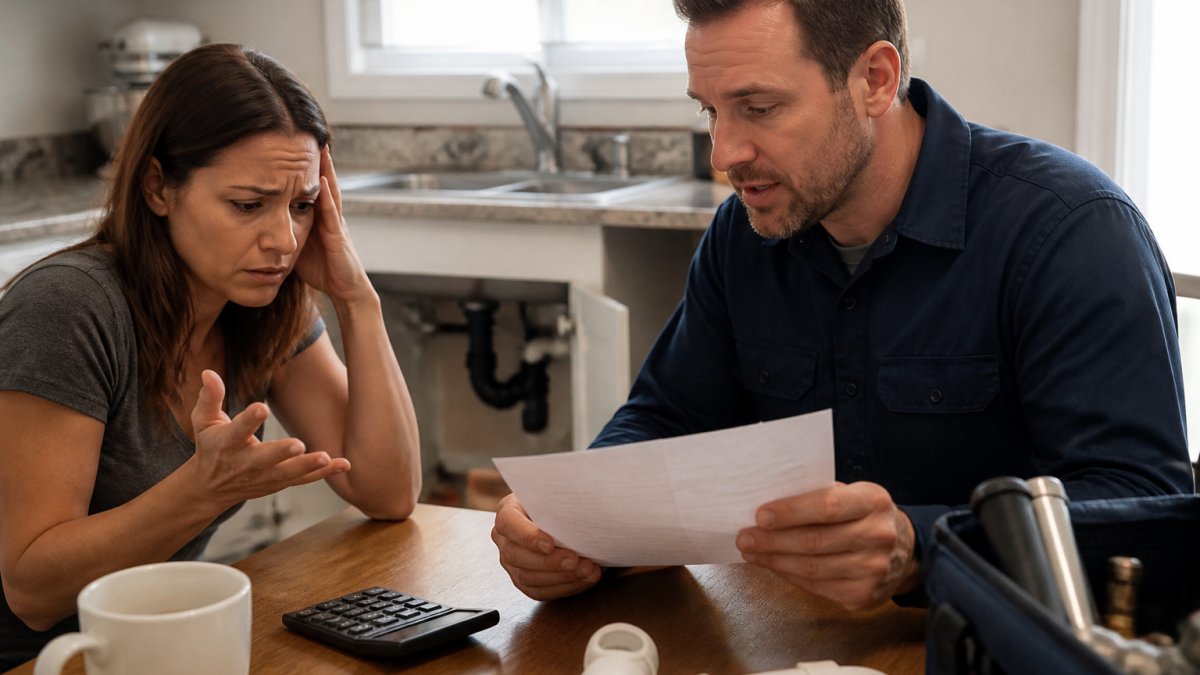
Avoiding surprise plumbing charges starts with understanding where they come from.
At Spencer4Hire Plumbing, we see the same pattern repeat: a hidden leak or failed water heater turns into a frantic search, and the first available plumber sets the terms.
A surprise plumbing charge is any cost added to your bill that was not clearly explained, quoted, or agreed to before the work started.
The Real Cost of a Hidden Fee
The damage goes beyond the invoice. A disputed charge delays the repair, meaning more water damage and a bigger job later, and many homeowners pay twice: once for the rushed fix, again when a qualified plumber redoes it properly. The fix is simple: ask a short list of questions before anyone picks up a wrench.
Questions to Ask a Plumber Before Hiring
Ask these before you book, not after the truck arrives. A qualified plumber answers without hesitation, and the answers give you a record to compare against the final bill.
- What is your service call or diagnostic fee, and does it apply to the repair?
- Is your pricing hourly or flat-rate, and which applies to my job?
- Are parts and materials billed separately from labor?
If a plumber dodges any of these, that is your answer. Move on.
The Fee Checklist: Every Charge to Confirm Before Booking
Use this checklist before confirming an appointment.
| Charge to Confirm | What to Ask | Why It Matters |
|---|---|---|
| Service call fee | Is it waived if I approve the repair? | Avoid paying twice for the visit |
| Diagnostic fee | Is it separate from the repair cost? | Some shops bill both |
| Travel fee | Is there a charge outside your core area? | Common on rural calls |
| After-hours rate | What is the weekend or overnight premium? | Can change the whole bill |
| Parts and materials | Billed at cost plus markup, or flat? | Markups vary widely |
| Labor time | Hourly, or flat per task? | Determines your risk |
| Permit costs | Who pulls the permit and pays for it? | Often forgotten until the end |
Ask for the estimate in writing, by email or text. A verbal “it should be around X” is worth nothing when the invoice arrives, but a written estimate is something you can hold a business to.
Plumbing Estimate vs. Quote: What’s the Difference?
A plumbing estimate is an educated guess at the final cost and can change. A plumbing quote is a fixed price for a defined scope of work.
For anything beyond a simple drain clearing, ask for a quote with a defined scope of work spelling out exactly what is included: which fixtures, which pipes, which tasks. Anything not listed is not covered, and that is where surprise plumbing charges hide.
How to Compare Quotes on an Apples-to-Apples Basis
Two quotes are only comparable if they cover the same work. Before comparing numbers, line up the scope, materials, labor terms, and what happens if the job changes.
- Match the scope of work line by line
- Confirm the same parts and materials are specified
- Check whether permits and disposal are included
A lower quote that excludes parts is not cheaper. It is just a smaller number today.
What a Plumber Call-Out Fee Actually Covers
A plumber call-out fee pays for the trip, the diagnosis time, and the expertise to tell you what is wrong. It is not a down payment on the repair unless the plumber says so.
Ask one question: “If I approve the repair today, does the call-out fee come off the bill?” The answer tells you a lot about how the rest of the pricing will go.
Hourly Rate vs. Flat-Rate Pricing: Which Protects You Better?
Flat-rate pricing protects you on jobs with unknown scope, such as a hidden leak behind a wall. Hourly pricing favors small, predictable tasks but leaves you exposed if the job drags on.
| Pricing Model | Best For | Your Risk |
|---|---|---|
| Hourly rate | Small, predictable repairs | Cost grows with time |
| Flat-rate pricing | Unknown or complex jobs | None if scope is fixed |
| Time and materials | Renovations with changing scope | Highest, unless capped |
The trap is a vague scope on a flat-rate job. If the plumber quotes a flat price but the scope says “repair leak,” you can still get a surprise charge when the leak turns out to be two leaks.
The Plumbing Invoice Checklist: Red Flags to Catch Before You Pay
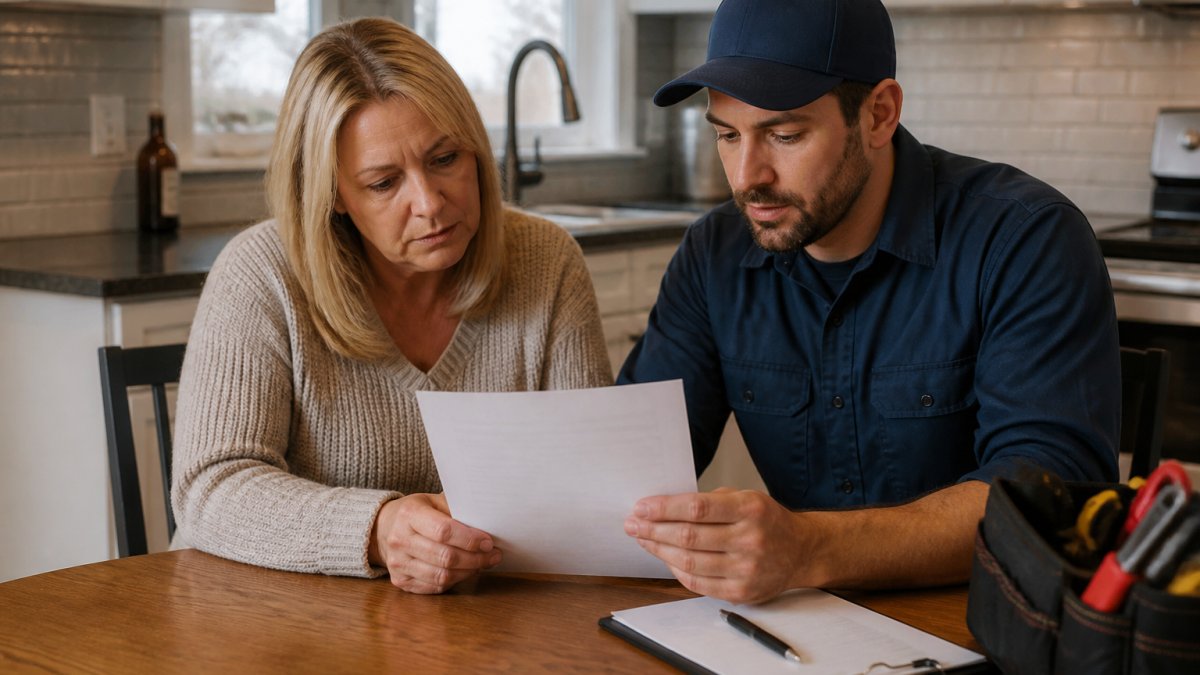
Review the itemized invoice before you pay, not after. A legitimate invoice lists labor time, parts, materials, and agreed extras, each with a clear description and a reference to the approved estimate or change order.
Watch for these red flags:
- Charges for work you did not approve in writing
- Vague line items like “miscellaneous” or “shop supplies”
- Labor hours that do not match the time on site
Match the Invoice to the Paper Trail
Before you pay, lay the invoice next to three documents: the written estimate or quote, any approved change orders, and your booking confirmation. Tick each line against one of those three and flag anything that does not match in writing. If a line item is unclear, ask for a written breakdown by email, that creates a record you can rely on later.
If the Invoice Does Not Match the Approved Estimate
A mismatch is not automatically a dispute. It is a question that needs an answer. Work through these steps in order:
- Ask for the itemized breakdown in writing. Request the labor hours, the parts list with part numbers, and the reason each extra was added.
- Point to the approved estimate or change order. Quote the specific line and the specific charge that differs.
- Request a corrected invoice. Give the business a reasonable window, such as five business days, to respond in writing.
- Pay only the undisputed portion if the business will accept it. Note in writing that the remaining amount is under review. Do not withhold the entire bill over a single line item if the rest of the work is correct.
- Escalate if the response is unsatisfactory. Consumer protection offices in each province and territory handle complaints about misleading pricing and unauthorized charges. The Competition Bureau’s deceptive pricing guidance is the federal reference point, and provincial consumer protection branches handle most service-dispute complaints.
Never pay a final invoice that includes work you did not authorize in writing. Once you pay, recovering an unauthorized charge becomes a dispute, and disputes take far longer than a two-minute conversation at the kitchen table.
Keep the Records That Make a Complaint Possible
A complaint is only as strong as the paperwork behind it. Keep these for at least two years:
- The written estimate or quote, and every change order
- The booking confirmation showing the quoted fees
- Photos of the problem before work started and after it finished
If the business is licensed, the licence number should appear on the invoice or estimate. If not, ask for it in writing before you pay, a licensed trade has a regulator behind it; an unlicensed one usually does not.
Pay by a method that leaves a trace, such as a credit card or e-transfer with a clear memo line. Cash leaves you with nothing to point to if the invoice is later disputed.
If something looks wrong, ask for an itemized breakdown before you pay. A trustworthy plumber will walk you through every line, and a written record protects both sides.
Emergency Triage: When to Call Now and When to Wait
Call immediately for an active burst pipe, sewage backup, or water you cannot shut off. For a slow drip or running toilet, shut off the supply, contain the water, and book a same-day or next-day visit at a normal rate. The triage rule: if water is actively flowing and you cannot stop it, call now; if it is contained and not damaging your home, wait for a scheduled visit.
The fastest way to control cost is to control urgency. A contained problem on a Tuesday morning costs far less than the same problem at 2 a.m. on a Sunday.
Preventive Maintenance: The Cheapest Way to Avoid Surprise Plumbing Charges
Preventive maintenance is the most effective way to avoid emergency rates and major repairs. A routine inspection catches hidden leaks, corrosion, and low water pressure before they become a burst pipe. Most surprise plumbing charges come not from the repair itself but from timing and access: a slow leak found during a scheduled visit is a small job, while the same leak found after it has soaked a ceiling adds drywall, insulation, and possibly mould remediation.
Book a checkup before winter to protect exposed pipes from freezing. Watch for the early warning signs:
- Rising water bills with no change in use
- Damp spots on walls, ceilings, or floors
- A water heater that takes longer to recover or shows rust at the base
What Actually Drives the Cost of the Repair Behind the Warning Sign
Two homeowners can report the same symptom and get very different bills. Four cost drivers explain the difference, and knowing them tells you which warning signs to act on first.
- Access. A fixture reachable from an open basement ceiling is a quick job. The same fixture behind a finished wall or under a tiled floor adds demolition and restoration, and restoration is often the larger line item.
- Timing. A weekday, business-hours appointment avoids after-hours and emergency premiums.
- Parts quality and availability. A standard cartridge or valve is usually in stock. A specialty or discontinued part can add a sourcing delay and a higher unit price, and the labour to fit it does not shrink to match.
The warning signs with the highest cost-driver exposure are the ones homeowners wait longest to report: damp spots, rust-colored water, and recurring slow drains. Those three most often turn a small scheduled repair into an emergency call.
A Simple Maintenance Calendar
You do not need a plumber on site every month. A short seasonal routine catches most problems that lead to surprise charges.
- Spring: Check the sump pump, test the backwater valve if you have one, and look for damp spots after the first heavy rain.
- Summer: Run every fixture you rarely use, including basement drains and outdoor taps, so traps do not dry out and valves do not seize.
- Fall: Insulate exposed pipes in unheated spaces, disconnect outdoor hoses, and shut off and drain exterior lines before the first freeze.
When to Book a Professional Inspection
A homeowner can handle the visual checks above. A licensed plumber should handle anything involving a water heater, main shutoff valve, backwater valve, or pipe you cannot see.
A minor repair today is far cheaper than water damage remediation tomorrow. Our team at Spencer4Hire Plumbing offers clear quotes with no hidden fees, so you know the cost before we start.
Frequently Asked Questions
Can a plumber charge more than the quoted price?
A plumber can charge more only if the scope of work changes and you approve the change in writing. Legitimate increases happen when hidden damage is found, such as corroded pipes behind a wall that require extra labor and parts. To avoid surprise plumbing charges, ask for a written change-order process upfront. If a plumber demands more money without explaining the additional work or giving you a chance to approve it, that is a red flag. Review the invoice line by line before paying.
What is a reasonable call-out fee?
Call-out fees vary by region, time of day, and whether the visit includes a diagnostic assessment. A reasonable fee covers the plumber’s travel time, fuel, and initial inspection. Some companies waive the fee if you proceed with the repair. Before booking, ask whether the call-out fee is separate from the diagnostic fee, whether it is credited toward the repair, and whether after-hours visits carry a surcharge. Getting these answers in writing helps you avoid surprise plumbing charges.
How do I compare plumbing quotes fairly?
Compare quotes on scope, not just the bottom line. Ask each plumber to list labor hours, parts and materials, permits, and any disposal fees separately. A lower quote that excludes parts or permit costs is not cheaper. Check whether the quote is an estimate (subject to change) or a fixed quote (locked in). Request a written estimate with a breakdown, then compare line items side by side. This apples-to-apples approach reveals the true cost and prevents unexpected charges.
What should I do if my plumbing bill is higher than the estimate?
Ask for an itemized invoice showing every charge, then compare it to the original written estimate. If the difference comes from approved extra work, the invoice should reflect that. If not, request an explanation in writing and reference your province’s consumer protection legislation, which covers unfair billing practices. Most licensed plumbers will resolve a legitimate dispute quickly. If they refuse, you can file a complaint with your provincial consumer protection office.
Surprise plumbing charges rarely come from bad luck. They come from vague scopes, verbal estimates, and questions asked too late. Spencer4Hire Plumbing offers clear quotes with no hidden fees, licensed and insured plumbers, and true 24/7 emergency service when you genuinely need it. Get started with Spencer4Hire Plumbing and book a written estimate before your next repair. Call Now!