Table of Contents
- What Drives the Cost of Home Plumbing Inspection
- Visual vs. Camera Inspection: Price Differences
- Benefits of Camera Pipe Inspection
- Plumbing Inspection Checklist: What Gets Checked
- How Long Does a Plumbing Inspection Take?
- Maintenance vs. Diagnostic Inspections: Which Do You Need?
- DIY vs. Professional Plumbing Inspection
- When to Schedule a Plumbing Inspection
- Frequently Asked Questions
Last Updated: September 27, 2026
What Drives the Cost of Home Plumbing Inspection
The cost of home plumbing inspection depends on three variables: house size, pipe age, and whether the plumber needs a camera to see inside the lines. This guide from Spencer4Hire Plumbing breaks down each factor so you can budget with confidence.
Home Size and Square Footage
Square footage sets the baseline. A small bungalow has fewer fixtures, shorter pipe runs, and fewer bathrooms to test, so the inspection moves quickly. A larger home with multiple floors, several bathrooms, a finished basement, and a long sewer lateral takes more time.
Home Age and Pipe Material
Pipe material is the single biggest cost variable. Older homes in Almonte and Perth often still contain galvanized steel, which corrodes from the inside and restricts water pressure. Copper and PEX lines are faster to assess, while clay or cast iron sewer laterals are prone to root intrusion and require camera work.
Visual vs. Camera Inspection: Price Differences
A visual inspection costs less because it relies on what the plumber can see and test at accessible points. A camera inspection costs more because it requires a specialized sewer scope pushed through the main line, plus time to review the footage.
What Actually Drives the Price Gap
The gap is the sum of four cost components a visual inspection does not carry:
- Equipment: A sewer scope camera and reel is a specialized tool, and the plumber amortizes its cost and maintenance across every camera job.
- Access work: The camera enters through a cleanout, a roof vent, or a pulled toilet, and locating the right access point adds time before the camera goes in.
- Line length: Camera time scales with the sewer lateral’s length, a short run to the municipal connection is quick, while a long lateral under a mature tree canopy takes longer.
- Footage review and reporting: The plumber must watch the recording, mark defect locations by distance from the access point, and write it up, billable time a visual check does not require.
Scope Comparison
| Element | Visual Inspection | Camera Inspection |
|---|---|---|
| Fixtures and supply lines | Yes | Yes |
| Drainage flow test | Yes | Yes |
| Water heater | Yes | Yes |
| Inside the sewer lateral | No | Yes |
| Locates defects by distance | No | Yes |
| Documents pipe material and condition | Partial | Yes |
| Suitable for insurance or real estate records | Sometimes | Yes |
When the Camera Is Worth the Extra Spend
A camera inspection earns its premium in a few situations:
- The home is older and the sewer lateral material is unknown or suspected to be clay or cast iron.
- There are mature trees between the house and the municipal connection.
- Drains have backed up more than once, or a slow drain keeps returning after snaking.
- A buyer or lender wants documented pipe condition for a real estate transaction.
- A previous lateral repair needs its condition confirmed.
Ask the plumber to quote the camera inspection as a separate line item from the visual inspection. That way you can see the true incremental cost of the scope work and decide whether the conditions above justify it.
Benefits of Camera Pipe Inspection
Camera pipe inspection answers the questions a visual check cannot: it shows the sewer lateral’s actual condition, identifies the location of clogs and cracks, and confirms whether tree roots have breached the line. The practical benefits:
- Pinpoints the exact location of a blockage, so excavation is targeted instead of exploratory
- Distinguishes between a simple clog and structural pipe failure
- Documents pipe material and condition for insurance or real estate purposes
- Confirms whether hydro-jetting will solve the problem or whether repair is needed
- Provides a baseline for future inspections and preventative maintenance
Plumbing Inspection Checklist: What Gets Checked
A standard plumbing inspection covers the full water and drainage system, from the main line to every fixture. The exact checklist varies by provider, but most licensed plumbers assess the same core components.
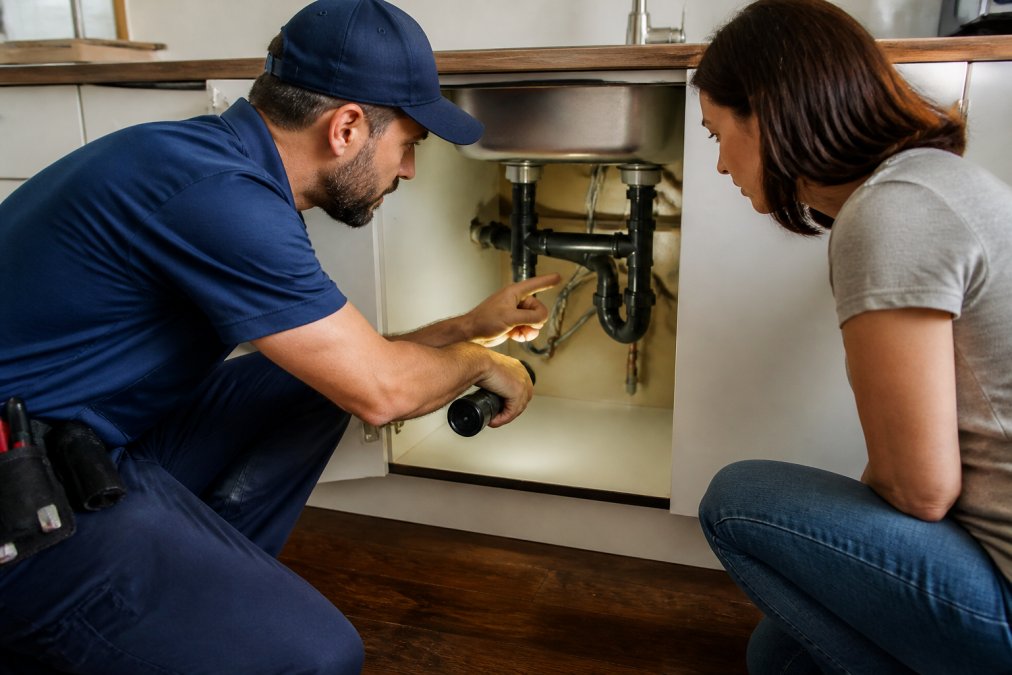
- Water pressure test at multiple fixtures, Confirms pressure is consistent. A drop at one fixture points to a local restriction; a drop everywhere points to the supply side or municipal connection.
- Visible supply line inspection for corrosion or leaks, Looks for green or white crust on copper, rust streaks on steel, and damp joints. Corrosion at a fitting often signals a pinhole leak forming.
- Drainage system flow test on every drain, Slow clearing on one drain is a local clog; slow clearing on several suggests a main line issue.
- Sewer lateral assessment (visual or camera), Checks the line from the house to the municipal connection. This check most often requires a camera and most often reveals a costly problem.
- Water heater assessment: age, anode rod, sediment, temperature setting, The anode rod protects the tank; once consumed, the tank corrodes from the inside. Sediment buildup shortens tank life and raises energy use.
- Toilet, faucet, and fixture servicing check, Tests for running toilets, dripping faucets, and loose fittings. Small leaks add up on the water bill and can damage cabinets and floors.
- Sump pump operation test, Confirms the pump cycles on and moves water. A pump that fails silently during a spring thaw or heavy rain commonly causes basement flooding.
- Shut-off valve function, Tests that the main and fixture shut-offs actually close. A seized valve turns a small repair into an emergency because water cannot be isolated.
- Signs of hidden leaks behind walls or under floors, Looks for staining, musty odors, soft drywall, and warped flooring. These leaks do the most damage before they are noticed.
- Plumbing code compliance review for recent renovations, Checks that recent work meets current code. Unpermitted work is common in flipped or previously renovated homes.
What a General Home Inspector Does Not Cover
A general home inspection and a plumbing inspection are not the same service. A general inspector runs fixtures, looks for visible leaks, and notes obvious defects, but does not perform pressure diagnostics, camera-scope the sewer lateral, or assess code compliance in detail. If a general inspection flags a plumbing concern, a licensed plumber’s diagnostic inspection is the next step.
How to Read the Inspection Report
Ask for the inspection report in writing, a verbal summary is not enough for insurance or a property sale. Sort findings into three buckets:
- Monitor: Minor wear or early corrosion that does not need action now but should be rechecked at the next maintenance visit.
- Repair soon: Active leaks, failing valves, or a water heater near end of life. These are scheduled jobs, not emergencies, but delaying them raises the cost.
- Repair now: Active leaks causing damage, a blocked or collapsed sewer lateral, or a failed sump pump. These need attention before further damage occurs.
Photograph the report and keep it with your home maintenance records. Insurers and buyers increasingly ask for documentation of pipe condition and maintenance history on older properties, and a dated report beats a verbal recollection.
How Long Does a Plumbing Inspection Take?
A standard plumbing inspection takes 1 to 2 hours for an average home. Larger properties, camera inspections, and homes with known problem areas can run 3 hours or more.
Maintenance vs. Diagnostic Inspections: Which Do You Need?
Maintenance inspections are scheduled, preventative, and routine. Diagnostic inspections are reactive, triggered by a slow drain, a spike in the water bill, or a sewage smell. This distinction changes what you’re paying for:
| Inspection Type | Trigger | Scope | Best For |
|---|---|---|---|
| Maintenance | Scheduled (annual or biennial) | Full system check, no known issue | Older homes, pre-winter prep |
| Diagnostic | A symptom or emergency | Targeted at the reported problem | Clogs, leaks, low pressure |
| Pre-purchase | Real estate transaction | Full system plus camera | Buyers, sellers, insurers |
Book maintenance inspections in early fall, before the first freeze. Frozen pipes are the most common winter emergency, and a pre-winter check on exposed lines, shut-off valves, and the sump pump catches weak points while a scheduled visit is still possible.
DIY vs. Professional Plumbing Inspection
You can handle surface-level checks yourself, but you cannot replicate a camera inspection, a pressure test, or a code compliance review without the tools and licence.
What a homeowner can reasonably do:
- Watch for slow drains, dripping faucets, and running toilets
- Check under sinks for moisture and staining
- Test the water heater‘s temperature and pressure relief valve
- Look for corrosion on visible supply lines
- Monitor the water bill for unexplained increases
Do not open cleanouts or snake a main line yourself if you smell sewage or see standing water backing up. A blocked sewer lateral under pressure can release contaminated water the moment you break the seal, and cleanup costs far exceed a professional service call.
When to Schedule a Plumbing Inspection
Schedule an inspection when you buy a home, when the house passes the 20-year mark, after any major renovation, and whenever you notice the warning signs below.
Signs you need a professional inspection:
- Water pressure that has dropped noticeably at one or more fixtures
- Drains that gurgle or back up repeatedly
- A water bill that has climbed without a change in usage
- Discolored water or a metallic taste
- Damp patches, musty smells, or staining on walls and ceilings
- A water heater past its expected service life
- A septic system showing slow drainage or frequent alarms
Frequently Asked Questions
How much does a plumbing inspection cost on average?
The plumbing inspection cost varies based on your home’s size, age, and the type of inspection. A basic visual inspection typically costs less than one that includes camera equipment. Factors like square footage, pipe material, and whether it’s a maintenance or diagnostic inspection all affect the final price. Request a detailed quote from a licensed plumber to get accurate pricing for your specific situation.
What is included in a professional plumbing inspection?
A professional plumbing inspection covers water pressure checks, leak detection, pipe integrity assessment, drainage system evaluation, water heater inspection, and fixture operation. The plumber will examine visible pipes, test shut-off valves, check for corrosion or blockages, and may use a sewer scope for the main line. You should receive an inspection report detailing findings and any recommended repairs.
How often should I have my home plumbing system inspected?
Most professionals recommend a plumbing inspection every 1-2 years for preventative maintenance. Older homes with galvanized or clay pipes may need annual inspections. You should also schedule one before buying a home, after a major renovation, or if you notice signs like slow drains, water stains, or unusual noises from your pipes.
Does a standard home inspection cover the entire plumbing system?
A standard home inspection typically includes a visual check of accessible plumbing fixtures and visible pipes, but it does not cover the entire system. It won’t include camera inspection of sewer lines, water heater assessment beyond basic function, or pressure testing. A dedicated plumbing inspection by a licensed plumber provides a more thorough evaluation of your drainage system, main line, and pipe integrity.
Plumbing problems rarely announce themselves until the damage is done. Spencer4Hire Plumbing offers licensed, insured inspections with transparent quotes, 24/7 emergency support, and a customer-focused approach that respects your property. Get started with Spencer4Hire Plumbing and protect your home’s plumbing system before a small issue becomes a major repair.