Last Updated: November 1, 2026
Quick Summary
Professional plumbing inspections matter because they find the problems you can’t see, before those problems find your wallet. A licensed plumber checks your water supply, drains, fixtures, and water-using appliances, then gives you a written summary of what’s fine, what needs watching, and what needs fixing. Catching a worn valve early costs far less than an emergency call, water damage cleanup, or a full repipe.
- Many homes benefit from a plumbing inspection every 12 to 24 months, and older homes may need one annually.
- Homes over 25 years old should be inspected once a year, especially with original piping.
- A water meter that moves when nothing is running means a hidden leak, full stop.
- Ask for inspection findings in writing to protect yourself and set a baseline for the next visit.
- Skipping an inspection to save a small fee is the most common way homeowners end up paying for a full repipe.
Table of Contents
- Why Professional Plumbing Inspections Matter More Than You Think
- What to Expect During a Plumbing Inspection
- The Professional Plumbing Inspection Checklist
- How Often to Inspect Home Plumbing
- The Cost of Home Plumbing Inspection and What It Saves
- Five Warning Signs You Need an Inspection Now
- Book Your Plumbing Inspection with Spencer4Hire Plumbing
- Frequently Asked Questions
Why Professional Plumbing Inspections Matter More Than You Think
A plumbing system is the one part of your home you never see working until it stops. A slow drip behind a wall can quietly rot the framing for months before anyone notices. That’s the core reason why professional plumbing inspections matter: they find the problems you can’t see, before those problems find your wallet.
A plumbing inspection is a top-to-bottom check of your home’s water supply, drains, fixtures, and water-using appliances, done by a licensed plumber rather than a quick glance under the sink. It’s not a repair visit. It’s a diagnostic visit.
Here’s the part most homeowners get wrong. They wait for a failure. Then they pay for emergency work, water damage cleanup, and sometimes a full replacement, all at once. An inspection flips that order.
What does that shift actually look like?
- Small leaks get caught early. A worn supply line or a failing shutoff valve is cheap to fix now.
- Pressure problems get diagnosed. Low pressure or banging pipes usually points to a specific cause, not a mystery.
- Water quality issues get flagged. Rust-colored water or mineral buildup tells a story about your pipes.
- Insurance and resale paperwork get easier. A documented inspection shows the system was maintained.
Below, we’ll walk through what happens during an inspection, how often to schedule one, what it costs, and the warning signs that mean you shouldn’t wait.
What to Expect During a Plumbing Inspection
A professional inspection follows a set path through your home, and you should know that path before anyone arrives. To see the full range of professional plumbing services available before booking, visit the services page. Expect a licensed plumber to check every water source, every drain, and the main shutoff, then explain what they found in plain language.
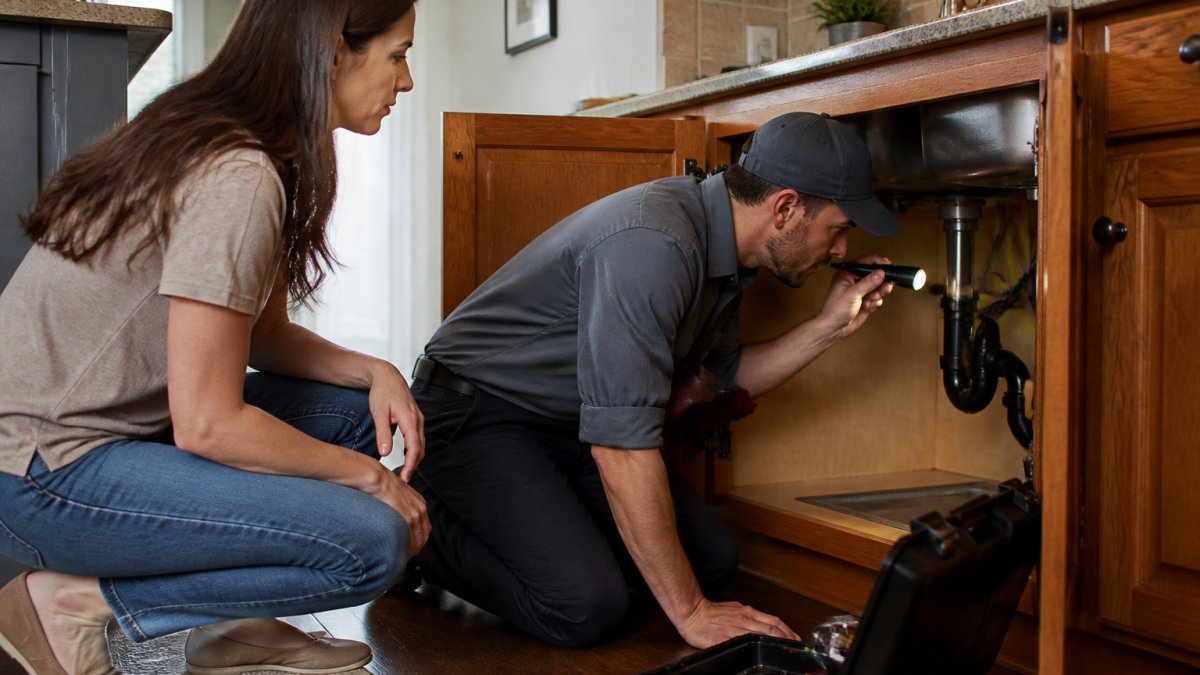
A typical walkthrough looks like this:
- Main shutoff and water meter check. The plumber confirms the valve works and looks for signs of hidden flow.
- Fixture-by-fixture review. Sinks, toilets, tubs, and showers get checked for leaks, weak flow, and loose fittings.
- Drain testing. Each drain is run to check for slow drainage and gurgling, which can point to a blockage forming.
- Water heater inspection. Age, temperature setting, and any corrosion around the tank get noted.
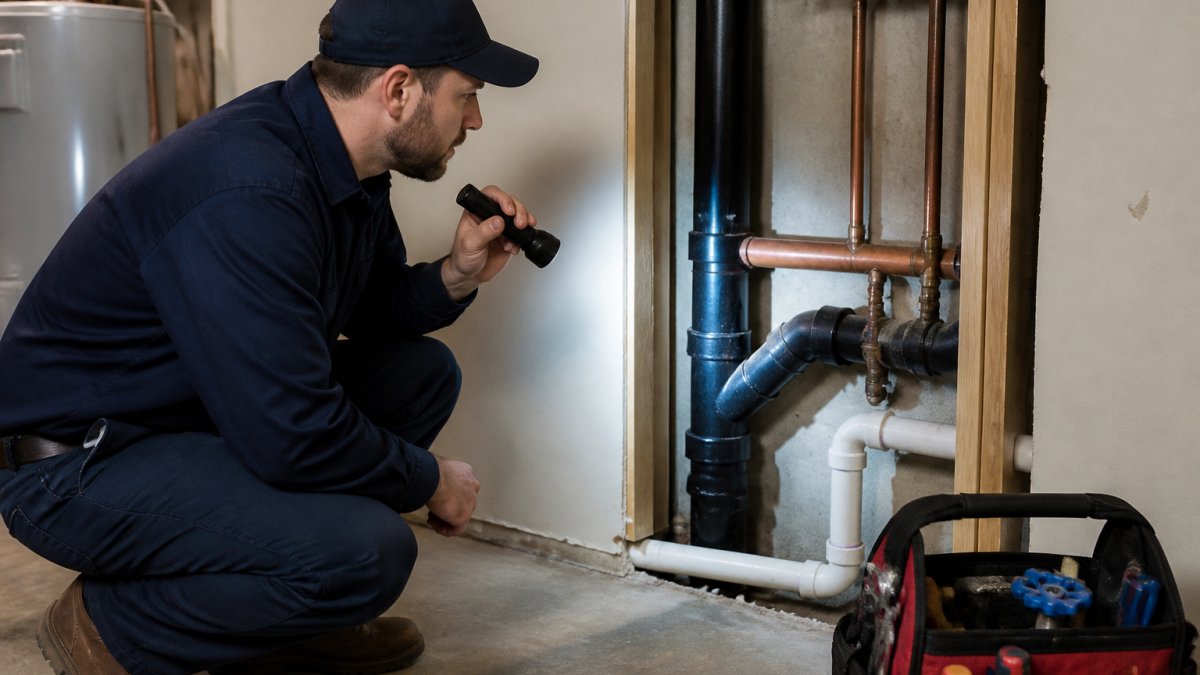
- Visible pipe review. Exposed pipes in the basement, crawlspace, or utility room are checked for corrosion, staining, or sagging.
- Written summary. You should leave with a clear list of what’s fine, what needs watching, and what needs fixing.
Ask for findings in writing. It protects you later and gives you a baseline for the next visit.
The Professional Plumbing Inspection Checklist
A professional plumbing inspection checklist is the tool that keeps an inspection consistent, and it’s the same list we work from on every visit. Use it to compare quotes or to check your own home between visits.
- Main water shutoff valve opens and closes smoothly
- No visible leaks at supply lines or under sinks
- Water pressure tested at multiple fixtures
- Toilets flush fully with no running or rocking
- Drains flow freely with no gurgling
- Water heater checked for age, corrosion, and temperature setting
- Exposed pipes checked for rust, staining, or sagging
- Sump pump tested and float checked
- Outdoor taps and hose bibs checked for freeze damage
- Hidden leak check using meter and moisture readings
That hidden leak check is the item most homeowners undervalue. Water can travel along a pipe and show up metres from the actual failure. Finding it means tracing the source, not just mopping the puddle. Learn how water leak detection in Carleton Place locates hidden leaks before they cause costly damage.
How Often to Inspect Home Plumbing
Many homes benefit from a plumbing inspection every 12 to 24 months, and older homes or homes with prior issues may need one annually. The right schedule depends on the house.
Here’s how to set your own schedule:
- Newer home with no history: every two years is reasonable.
- Home over 25 years old: once a year, especially with original piping.
- Recent renovation or new appliance: inspect within the first year.
- Recurring clogs or pressure drops: inspect now, then annually.
- Before buying or selling: always, regardless of age.
Older homes often still carry original piping that has quietly narrowed or corroded over decades. Age alone isn’t a problem. Age plus no inspection is. If you’re unsure what your pipes are made of, that’s a good reason to book a look rather than guess.
Here’s how the article suggests setting an inspection schedule based on your home’s situation.
| Home situation | Suggested frequency |
|---|---|
| Newer home with no history | Every two years |
| Home over 25 years old | Once a year |
| Recent renovation or new appliance | Within the first year |
| Recurring clogs or pressure drops | Now, then annually |
| Before buying or selling | Always, regardless of age |
| General guidance | Every 12 to 24 months |
The Cost of Home Plumbing Inspection and What It Saves
The cost of a home plumbing inspection depends on the size of the house and how many fixtures need checking. Pricing depends on the details of each home, so check the Spencer4Hire Plumbing website for current prices or request a quote.
What we can tell you is where the money goes. An inspection is a small, planned expense. A burst supply line is not. Neither is a failed water heater, a sewage backup, or mould remediation after a slow leak.
The savings show up in three places:
- Prevention. Catching a worn valve before it fails costs far less than an emergency call at 2 a.m.
- Efficiency. A water heater set too high or a running toilet quietly raises every bill.
- Damage control. Water damage is the expensive part, not the pipe.
Watch out: skipping an inspection to save a small fee is the most common way homeowners end up paying for a full repipe instead of a simple repair. For current rates, check the Spencer4Hire Plumbing website before you book.
Five Warning Signs You Need an Inspection Now
Some problems can wait for a scheduled visit. These five cannot. If you spot any of them, book an inspection now rather than at your convenience.
- Water stains on ceilings or walls. Brown rings or bubbling paint mean moisture is already inside the structure.
- A water meter that moves when nothing is running. That’s a hidden leak, full stop.
- Slow drains in more than one fixture. Multiple slow drains point to a main line problem, not a single clog.
- Rusty or discolored water. This can signal corroding pipes or a failing water heater.
- Sewage smells or gurgling. These often mean a blocked or damaged sewer line.
That last one deserves attention. A sewer problem doesn’t fix itself, and it gets worse fast. If an inspection turns up a damaged line, sewer line repair covers what happens next. And if a sign turns urgent before you can book, 24/7 emergency plumbers are available around the clock.
Book Your Plumbing Inspection with Spencer4Hire Plumbing
Booking an inspection is the cheapest insurance your home’s plumbing will ever get. It’s a planned visit, a clear report, and a list of what to fix before it becomes an emergency.
When you book with Spencer4Hire Plumbing, you can expect:
- Licensed and insured plumbers on every visit
- Same-day or next-day scheduling in most cases
- Clear quotes with no hidden fees before any work starts
- True 24/7 emergency support if something turns urgent
Spencer4Hire Plumbing serves homeowners in Carleton Place and the surrounding area, with clear communication and honest pricing.
Frequently Asked Questions
Why should you have your plumbing professionally inspected?
A professional plumbing inspection catches problems that are invisible from the surface, like slow leaks under floors, corroded pipe joints, and a failing water heater. Left alone, these issues can lead to water damage, mould, and emergency repairs. An inspection also documents the condition of your system so you can plan for upgrades before something fails. For older homes with galvanized or aging pipes, an inspection is the only reliable way to know how much life is left in the system.
How much does a home plumbing inspection cost?
The cost of a home plumbing inspection depends on the size of the home, the number of fixtures, and whether you add extras like a camera scope of the main drain. Spencer4Hire Plumbing has pricing information on its website, so you can review it before you book. Compared with the cost of repairing water damage or replacing a burst pipe, an inspection is a small expense. Ask for a clear quote upfront so there are no surprises.
How often should a home’s plumbing be inspected?
Most homes benefit from an inspection every two to three years. Schedule one annually if your home is older than 30 years, has galvanized pipes, or sits on a property with mature trees that could send roots into the sewer line. You should also book an inspection before buying a home, after a major renovation, or any time you notice slow drains, rising water bills, or discoloured water. A plumber can recommend a schedule based on what they find.
Can a plumbing inspection prevent costly repairs?
Yes. Inspections find the small problems that grow into big ones: a pinhole leak, a loose fitting, a water heater nearing the end of its life. Fixing those early usually costs far less than repairing water damage or replacing a failed system. An inspection also gives you a written record of your plumbing’s condition, which helps you budget for future work instead of reacting to emergencies. Prevention is always cheaper than cleanup.
Your plumbing won’t warn you before it fails. It gives small signals, and most of them are invisible without a trained eye and the right tools. Spencer4Hire Plumbing can catch those signals early with licensed, insured plumbers, same-day scheduling, and clear quotes before any work begins. Get started with Spencer4Hire Plumbing and book a trusted plumbing service that protects your home before a small drip becomes a big bill.