Last Updated: November 2, 2026
Quick Summary
The common reasons for recurring plumbing issues are partial clogs that were never fully cleared, worn parts replaced with the wrong size or material, pipe condition problems like corrosion or scale, water pressure and water quality, and installation errors that were never corrected. A recurring plumbing problem is a pattern, not an accident, so it usually persists because the symptom gets treated while the cause remains active.
- A snake punches a hole through a clog but rarely scrubs pipe walls clean, so buildup stays.
- Chemical drain cleaner clears a channel, not the blockage, and can damage older pipes.
- Galvanized steel lines typically last 40-50 years before internal corrosion becomes a recurring problem.
- Two or more matches on the symptom-to-cause checklist mean you’re dealing with a root cause.
- Three or more clogs in a year, backups in multiple drains, or rusty water signal a system-level problem.
Table of Contents
- Why the Same Plumbing Problems Keep Coming Back
- Symptoms vs. Root Causes: The Difference That Decides the Repair
- Recurring Drain Clogs: What Actually Causes a Drain to Block Again
- Causes of Low Water Pressure and Fluctuating Flow
- Leaks, Running Toilets, and Worn Components That Return
- Early Warning Signs of Plumbing Problems You Should Not Ignore
- When Recurring Issues Point to a Larger System Problem
- Your Plumbing Maintenance Checklist to Prevent Repeat Failures
- Book a Licensed Plumber Before the Next Failure
- Frequently Asked Questions
Why the Same Plumbing Problems Keep Coming Back
Most recurring plumbing issues start with a fix that never addressed the cause.
That distinction matters more than any single repair tip. A recurring plumbing problem is a pattern, not an accident.
The common reasons for recurring plumbing issues usually fall into five groups:
- Partial clogs that were never fully cleared
- Worn parts replaced with the wrong size or material
- Pipe condition problems, like corrosion or scale
Below, we’ll walk through each one, show you the warning signs, and give you a checklist to stop the cycle.
The article groups the common reasons for recurring plumbing issues into five broad categories.
| Cause group | What it means |
|---|---|
| Partial clogs never fully cleared | Buildup stays on pipe walls and catches debris again |
| Worn parts replaced with wrong size or material | Mismatched washers, gaskets, or seals fail early |
| Pipe condition problems | Corrosion or scale narrows the inside of the pipe |
| Water pressure and water quality | Pressure and hard water work against the system |
| Installation errors never corrected | Faulty original work keeps causing repeat failures |
Symptoms vs. Root Causes: The Difference That Decides the Repair
A symptom is what you notice. A root cause is what produced it. Slow drainage is a symptom. A collapsed section of clay pipe under the lawn is a root cause.
Fixing symptoms is cheap and fast, which is why it happens so often. Fixing causes costs more up front but ends the repeat visits. The trick is knowing which one you’re dealing with.
A Symptom-to-Cause Checklist
Use this checklist before authorizing any repair. It forces you to trace the pattern rather than react to the latest failure.
- Location pattern: Does the problem always return to the same fixture, or does it move around? Same spot points to a localized cause (pipe condition, installation error). Moving around points to a system-wide cause (pressure, water quality, shared drain line).
- Timing pattern: Does it recur after heavy use, after rain, seasonally, or randomly? Rain-related backups suggest root intrusion or a cracked line. Seasonal patterns can indicate temperature-driven expansion or water-table changes.
- Repair history: Was the last fix a patch (snaking, chemical cleaner, tightened fitting) or a replacement (new valve, new section of pipe)? Patches almost always recur. Replacements that recur point to a wrong part, incompatible material, or an uncorrected installation error.
- Fixture age and material: Is the fixture or pipe near the end of its service life? Knowing the material tells you whether you’re fighting a one-off or a dying system.
- Water quality clues: Is there scale on aerators, white crust at joints, or rusty water on first draw? These point to hard water, sediment, or corrosion actively working against the system.
Two or more pattern matches on this checklist mean you’re dealing with a root cause. That’s your signal to stop patching and start diagnosing.
Before calling a plumber, write down the answers to these five questions. A licensed plumber can diagnose faster when you hand over a pattern instead of a single incident.
Why the Distinction Decides the Repair
A snake job on a grease-clogged kitchen line costs far less than a camera inspection and jetting, but it will recur. A cheaper repair is only cheaper if it ends the cycle.
A useful rule is to look for a diagnosis of the cause, not just a fix of the symptom, when the same problem keeps returning. That diagnosis might be as simple as a camera inspection of the drain line or as involved as a pressure test of the supply system, but it is the only way to stop paying for the same repair twice.
Recurring Drain Clogs: What Actually Causes a Drain to Block Again
Recurring drain clogs happen when something keeps rebuilding inside the pipe. The usual culprits are grease, hair, soap residue, and mineral scale.
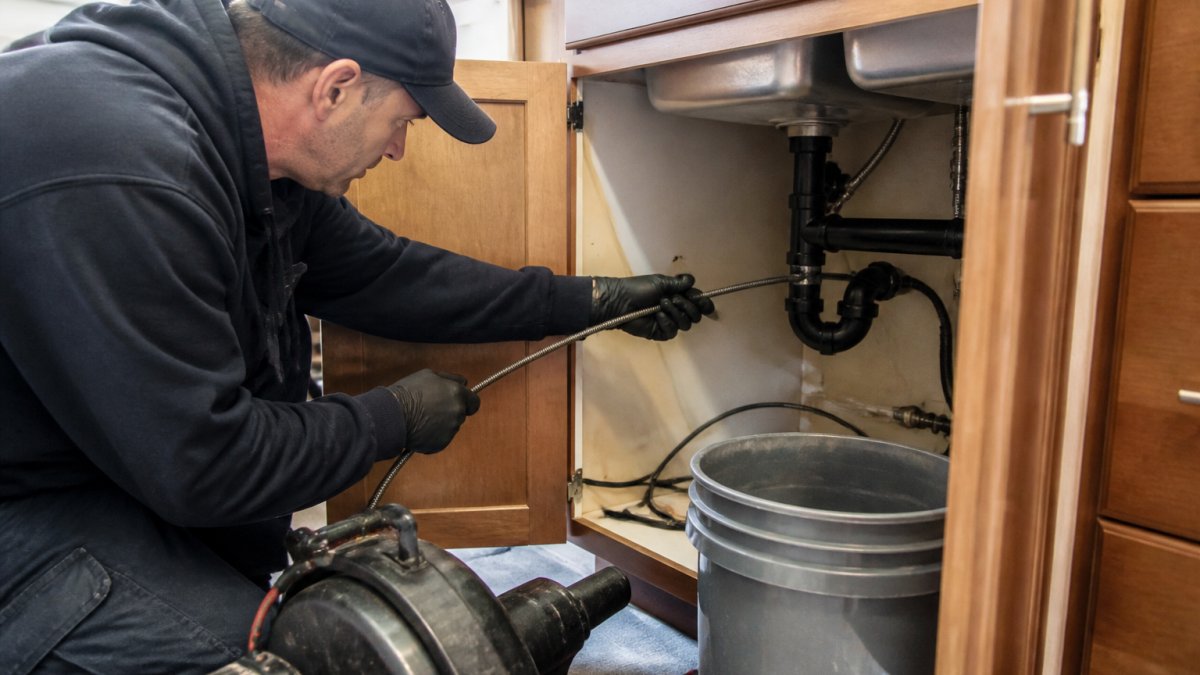
A snake punches a hole through the clog. It rarely scrubs the walls clean. So the buildup stays, and the next bit of debris catches on it.
Watch out: pouring chemical drain cleaner down a slow drain can damage older pipes and still leave the clog in place.
Hair, Grease, and Mineral Buildup in Older Pipes
Hair and soap residue bind together in shower drains and form a mat that a plunger just pushes around. In kitchens, grease cools and coats the pipe like candle wax. Older galvanized lines add a third layer: corrosion and scale that grab everything passing through.
If your drain keeps clogging in the same place, the pipe itself may need professional drain cleaning and pipe repair rather than another snake job.
Causes of Low Water Pressure and Fluctuating Flow
The most common causes of low water pressure are a partially closed valve, a clogged aerator, sediment in the pipes, or a failing pressure regulator.
Start with the cheap checks. Unscrew an aerator and look for grit. Confirm the main shutoff valve is fully open.
If only one fixture is weak, the problem is local.
Sediment buildup is a quiet offender. It collects in older steel and galvanized pipes and narrows the flow path year by year.
Leaks, Running Toilets, and Worn Components That Return
A leak that comes back was usually never fully fixed. Common repeat offenders are dripping faucets, leaking supply lines, and running toilets. Each one traces back to a small part that wore out or was installed wrong.
A running toilet is the classic example. The flapper doesn’t seal, water trickles into the bowl, and the fill valve runs all night.
Worn Washers, Gaskets, and Seals
These parts are cheap and fail predictably. The problem is matching the replacement to the fixture. A washer that’s slightly too thick, or a seal made of the wrong rubber, will fail early.
Watch out: overtightening a new fitting crushes the gasket and creates the leak you were trying to stop.
If a hidden leak keeps returning, water leak detection can trace it to the source before it damages drywall or flooring.
Early Warning Signs of Plumbing Problems You Should Not Ignore
The early warning signs of plumbing problems are easy to miss because they’re small. Catch them early and you avoid the emergency call.
- Water pooling at the base of a toilet or water heater
- A metallic or sulfur smell from taps
- Drains that gurgle after use
Any one of these deserves a look. Two or more together usually mean a system issue, not a one-off.
When Recurring Issues Point to a Larger System Problem
Some patterns mean the pipes themselves are the problem, not the fixture. Three or more clogs in a year, backups in multiple drains, or rusty water across the house are all system-level signals.
At that point, repairs stop being cost-effective. You’re paying to patch a system that will keep failing in new places. The pattern is telling you the weak point is the system, not the fixture.
Warning Signs of a Shared Drain-Line or Sewer Problem
A shared drain line or main sewer line problem shows up as patterns across multiple fixtures:
- Multiple drains backing up at once, especially the lowest fixtures in the home (basement floor drain, laundry standpipe).
- Gurgling from one fixture when another is used, which indicates a venting or pressure-balance issue in the shared line.
- Sewage odors in the basement or near the floor drain, which can signal a break or blockage in the main line.
Any two of these together warrant a camera inspection of the main line. Roots, bellies, and cracks are common causes, and they do not resolve with snaking. Sewer line repair and a camera inspection will show whether the line needs spot repair, lining, or replacement.
Warning Signs of a Supply-Line or Pressure Problem
Supply-side issues show up differently:
- Pressure that drops when one fixture is used, indicating a shared supply line that is undersized or partially blocked.
- Rusty or discolored water on first draw across multiple taps, which points to corrosion in the supply lines or the water heater.
- Water hammer or banging pipes, which can indicate failing valves, loose pipes, or high pressure.
When Aging Pipes Are the Root Cause
Aging pipes are a common root cause. Corrosion narrows the inside, joints weaken, and pressure drops. Galvanized steel lines typically last 40-50 years before internal corrosion becomes a recurring problem. If your home has either and has never been repiped, recurring leaks and pressure issues are likely to continue until the lines are replaced. Home repiping replaces the failing lines and restores reliable flow.
If you see sewage backup, smell sewage in the basement, or have widespread pressure loss, stop using the water and call a licensed plumber. These are system-level failures, not DIY fixes.
The Escalation Rule
When the same problem keeps returning, or several fixtures are affected at once, a professional diagnosis of the system is a sensible next step rather than another fixture-level repair.
Your Plumbing Maintenance Checklist to Prevent Repeat Failures
A plumbing maintenance checklist turns guesswork into a routine. Run through it seasonally and you’ll catch most repeat failures before they start.
- Test every tap for flow and check under sinks for moisture
- Flush each toilet and listen for a running fill valve
- Run hot water through drains to move grease along
That last item matters. A slow drain that keeps coming back is cheaper to diagnose than to keep snaking.
Book a Licensed Plumber Before the Next Failure
Repeated repairs are a warning, not bad luck. If you’re facing another backup or a leak that won’t stay fixed, reach a 24/7 emergency plumber before it turns into water damage.
At Spencer4Hire Plumbing, our licensed and insured plumbers focus on clear communication and customer-focused service. Clear quotes with no hidden fees, same-day or next-day service, and 24/7 emergency support are part of how we work.
Get started with Spencer4Hire Plumbing and stop paying for the same repair twice.
Frequently Asked Questions
Why do plumbing problems keep coming back after I fix them?
Repeat failures usually mean the symptom was treated, not the cause. Clearing a recurring drain clog removes the blockage but leaves the grease, hair, or mineral buildup lining the pipe that caused it. The same applies to a dripping faucet fixed with a new washer when the valve seat is worn. Recurring plumbing issues often trace back to pipe condition, water quality, or installation errors, so the fix has to address the underlying cause rather than the visible leak or clog.
Can a clogged drain keep recurring after it has been cleared?
Yes. Recurring drain clogs are common in older homes where cast iron or galvanized pipes have roughened interiors that catch soap residue, hair, and food particles. A cable clears the passage but does not smooth the pipe wall, so debris collects again within weeks or months. If the same drain blocks more than twice in a year, ask a licensed plumber to inspect the pipe with a camera and check for buildup, bellies, or root intrusion before clearing it again.
What are the early warning signs of plumbing problems?
Watch for slow drains across multiple fixtures, water pressure that drops when another tap runs, faint musty smells under sinks, water stains on ceilings or cabinet floors, and a water meter that moves when nothing is running. These early warning signs of plumbing problems usually appear before a burst pipe or sewage backup. A running toilet that refills on its own is another signal, since a worn flapper can waste hundreds of litres a day without any visible leak.
When should a recurring plumbing problem be handled by a plumber?
Call a licensed plumber when the same issue returns within a few months, when more than one fixture is affected, or when you see water where it should not be. Low water pressure throughout the house, sewage smells, and repeated toilet clogs point to a system issue that snaking or a store-bought cleaner will not solve. Spencer4Hire Plumbing offers same-day or next-day service and 24/7 emergency support, with clear quotes before any work starts.
Plumbing problems that keep returning are trying to tell you something. The fix is to listen, diagnose the root cause, and repair it properly the first time. Spencer4Hire Plumbing offers licensed plumbers, 24/7 emergency availability, and upfront quotes so you know the cost before we start. Call today and get the problem solved for good.